
|
 |
 | | | | | | |||||||||||||||||||||||||||||||||||||||||||||||||||||||||||||||||||||||||||||||||||||||||||||||||||||||||||||||||||||||||||||||||||||||||||||||||||||||||||||||||||||||||
| | | You are in: Asia-Pacific | |||||||||||||||||||||||||||||||||||||||||||||||||||||||||||||||||||||||||||||||||||||||||||||||||||||||||||||||||||||||||||||||||||||||||||||||||||||||||||||||||||||||||||
|
| | Thursday, 30 January, 2003, 14:50 GMT Analysis: The tensions behind the riots  Cambodia and Thailand are uneasy neighbours
Relations between Thailand and Cambodia have always been fraught. There have been centuries of conflict and territorial disputes. Even in recent years, as bilateral ties have flourished with massive Thai economic interests in Cambodia, it has remained an uneasy relationship. For Cambodians, the temple complex at Angkor Wat is a national symbol, so any question of its control is bound to be met with universal horror among almost all Cambodians.
For weeks now the dispute has been simmering, ever since reports that one of Thailand's young female TV stars said Angkor Wat belonged to Thailand and should be returned. The actress at the centre of the dispute, Suvanant Kongying said she did not made any such comments. "I want the Khmer people to understand that I didn't say anything like that. I am really worried. I am sorry that this false story was spread and created this misunderstanding between us," she said. There have been suggestions that a character she played in a Thai TV soap, that is regularly shown in Cambodia, made the comments in an episode made some years ago.
But Ms Suvanant said the company has checked the scripts and the videos of past episodes and cannot find any references which could have given rise to the alleged comments. Despite the apparent close relationship between Phnom Penh and Bangkok, there has been a growing disenchantment amongst Cambodia's elite - politicians and businessmen - that Thailand was taking advantage of Cambodia's comparative weakness and its need for foreign investment and trade. The two countries took several years to negotiate a bilateral trade deal. "Cambodia continued to resist signing the agreement because they felt that Thailand had not taken Cambodia's concerns into account sufficiently," said a senior Cambodian government official who did not want to be identified. Simmering resentment The resentment goes back centuries to when the Thai and Khmer monarchs fought each other for territory and power. Located in north-west Cambodia -- some 300 kilometres (180 miles) from the current Cambodian capital Phnom Penh, Angkor Wat remained the capital of the Khmer empire until it fell to the Thais in 1431.
At that time the Thais stole many precious artefacts and took them back to their royal capital at Ayutthaya. Angkor Wat was later abandoned and remained untouched until it was rediscovered by a French explorer in the nineteenth century. The complex reverted to French rule in 1907 after the French colonisation of Indochina. During World War II, the Thais took control of parts of Cambodia and briefly retook Angkor Wat. Neglect Centuries of civil war in Cambodia has taken its toll on Angkor Wat. It suffered from looting and neglect and it was often the target of Khmer Rouge attacks during the bitter struggles in the 1970s and 1980s. But since the UN-sponsored peace agreement between the warring Khmer factions and internationally sponsored elections, Angkor Wat has become the central attraction of Cambodia's fledgling tourist industry. Cambodians see Angkor as a vital part of their identity. "Angkor Wat is the heart and life of Cambodia, it is the soul of our culture," said one 48-year-old man, Seoum. "Any attack on it is an attack on all Cambodians," he said. Official complicity But questions remain about why the anti-Thai demonstrations flared when they did and why they ended so violently. "It was certainly organised," said a freelance Cambodian journalist who wanted to remain anonymous. "And it certainly looked as though there was some form of official complicity," he said. There is no doubt that there has been a simmering revival of nationalist sentiment in Cambodia recently. Some analysts feel this is part of contemporary politics in the lead up to the July elections. But in the end, all Cambodians are likely to suffer if this dispute continues to sour relations between Bangkok and Phnom Penh. For a country desperately trying to attract foreign investors and tourists, Wednesday's violence will be a major set back. | | See also:  30 Jan 03 | Asia-Pacific 22 Nov 01 | Crossing Continents 27 Jun 01 | Asia-Pacific 13 Jan 01 | From Our Own Correspondent 13 Feb 98 | Science/Nature Internet links: The BBC is not responsible for the content of external internet sites Top Asia-Pacific stories now: Links to more Asia-Pacific stories are at the foot of the page. | |||||||||||||||||||||||||||||||||||||||||||||||||||||||||||||||||||||||||||||||||||||||||||||||||||||||||||||||||||||||||||||||||||||||||||||||||||||||||||||||||||||||||
 | |
|  E-mail this story to a friend E-mail this story to a friend |
| |
| Links to more Asia-Pacific stories |
| | | ||
 | ||||
 | | Back to top
| ||
| ---------------------------------------------------------------------------------- To BBC Sport>> | To BBC Weather>> | To BBC World Service>> ---------------------------------------------------------------------------------- © MMIII | News Sources | Privacy |






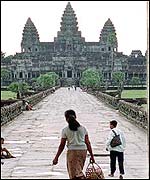

 Angkor Wat is the heart and life of Cambodia, it is the soul of our culture