|
 |
 | | | | | | |||||||||||||||||||||||||||||||||||||||||||||||||||||||||||||||||||||||||||||||||||||||||||||||||||||||||||||||||||||||||||||||||||||||||||||||||||||||||||||||
| | | You are in: Asia-Pacific | |||||||||||||||||||||||||||||||||||||||||||||||||||||||||||||||||||||||||||||||||||||||||||||||||||||||||||||||||||||||||||||||||||||||||||||||||||||||||||||||||
|
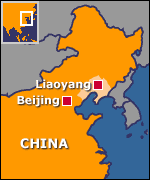
| | Wednesday, 15 January, 2003, 07:49 GMT China protest leaders go on trial  The protests were some of the biggest for years The trial has been held in northeast China of two men charged with attempting to overthrow the state during large-scale workers' protests last year Yao Fuxin and Xiao Yunliang, who were arrested last March, are accused of helping to co-ordinate mass demonstrations in the north-eastern city of Liaoyang.
The charge of subversion can carry the death penalty, though analysts believe the men are more likely to receive prison sentences, given China's concern about its international image. The trial is being closely watched by foreign human rights and labour groups. The protests the men were accused of orchestrating were among the biggest of their kind seen in China. Crowds of up to 30,000 people gathered to denounce corrupt local politicians and to demand more help for workers laid off from their jobs. Rights concerns The head of the New York-based China Labour Watch, Li Qiang, said the trial had ended after a few hours. He said he had spoken to a relative of one of the defendants, who had attended the trial.
The rights group Amnesty International said there were "serious concerns" over whether Yao Fuxin, 57, and Xiao Yunliang, would receive a fair trial. "If they are convicted of subversion after doing nothing more than peacefully exercising their rights to freedom of expression, association or assembly, we would consider them to be prisoners of conscience," it said in a statement. Large-scale demonstrations are still unusual in China, but correspondents say the country's crumbling state-owned enterprises and spiralling unemployment could spark increased unrest. Most of those who took part in last year's protests in Liaoyang worked for the city's Ferro-Alloy Factory, a bankrupt, state-owned enterprise. When the factory closed, employees were promised pensions and back wages. But they never materialised and many of the unemployed workers suspected the factory's managers of embezzlement. | | See also:  01 Jan 03 | Asia-Pacific 09 May 02 | Asia-Pacific 11 Dec 02 | Asia-Pacific 19 Mar 02 | Business 28 Mar 02 | Asia-Pacific 13 Mar 02 | Asia-Pacific 11 Mar 01 | Asia-Pacific 19 Sep 01 | Business Internet links: The BBC is not responsible for the content of external internet sites Top Asia-Pacific stories now: Links to more Asia-Pacific stories are at the foot of the page. | |||||||||||||||||||||||||||||||||||||||||||||||||||||||||||||||||||||||||||||||||||||||||||||||||||||||||||||||||||||||||||||||||||||||||||||||||||||||||||||||
 | |
|  E-mail this story to a friend E-mail this story to a friend |
| |
| Links to more Asia-Pacific stories |
| | | ||
 | ||||
 | | Back to top
| ||
| ---------------------------------------------------------------------------------- To BBC Sport>> | To BBC Weather>> | To BBC World Service>> ---------------------------------------------------------------------------------- © MMIII | News Sources | Privacy |