|
 |
 | | | | | | ||||||||||||||||||||||||||||||||||||||||||||||||||||||||||||||||||||||||||||||||||||||||||||||||||||||||||||||||||||||||||||||||||||||||||||||||||||||||||||||
| | | You are in: Asia-Pacific | ||||||||||||||||||||||||||||||||||||||||||||||||||||||||||||||||||||||||||||||||||||||||||||||||||||||||||||||||||||||||||||||||||||||||||||||||||||||||||||||||
|
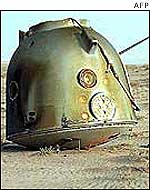
| | Sunday, 5 January, 2003, 18:30 GMT Chinese spacecraft lands  The capsule came down in Inner Mongolia China's fourth unmanned spacecraft, Shenzhou IV, has returned to Earth. The official Xinhua news agency said it landed as planned on the central grasslands of the vast Inner Mongolia region, a replay of the conclusion of the three previous Shenzhou missions. The craft had been in orbit since Monday. It is thought that this was the last test flight before a manned mission planned for later in the year. Taikonauts According to the China Daily, the craft functioned normally and the experiments carried out on board were successful.
To distinguish them from Russian cosmonauts and American astronauts, China uses the term "taikonauts" for its would-be space crews, deriving from the word "taikong" meaning space. It is understood that about a dozen fighter pilots are training to become taikonauts, although there have been conflicting reports about how many have been chosen and where they are undergoing their training. Previous success The first test flight of the Shenzhou programme was in November 1999, when a capsule orbited the Earth 14 times in a 12-hour mission aimed at testing launch and re-entry systems. Shenzhou II, launched in January 2001, circled the Earth 108 times and tested life support systems - it put a monkey, a dog, a rabbit and snails into orbit. It returned nearly a week later to a press blackout that left Western analysts suspecting a re-entry failure. The Chinese authorities denied this. Shenzhou is modelled on Russian space technology, but with wide-ranging modifications by Chinese engineers. In April 2002, Shenzhou III carried out a successful week-long flight. If the Chinese are successful, they would be only the third country to put humans into space, joining the United States and Russia. | | See also:  02 Jan 03 | Asia-Pacific 30 Dec 02 | Science/Nature 21 May 02 | Science/Nature 06 Dec 02 | Science/Nature 15 Jan 03 | Science/Nature Internet links: The BBC is not responsible for the content of external internet sites Top Asia-Pacific stories now: Links to more Asia-Pacific stories are at the foot of the page. | ||||||||||||||||||||||||||||||||||||||||||||||||||||||||||||||||||||||||||||||||||||||||||||||||||||||||||||||||||||||||||||||||||||||||||||||||||||||||||||||
 | |
|  E-mail this story to a friend E-mail this story to a friend |
| |
| Links to more Asia-Pacific stories |
| | | ||
 | ||||
 | | Back to top
| ||
| ---------------------------------------------------------------------------------- To BBC Sport>> | To BBC Weather>> | To BBC World Service>> ---------------------------------------------------------------------------------- © MMIII | News Sources | Privacy |