|
 |
 | | | | | | ||||||||||||||||||||||||||||||||||||||||||||||||||||||||||||||||||||||||||||||||||||||||||||||||||||||||||||||||||||||||||||||||||||||||||||||||||||||||||||||||||||||||||||||||||||||||||||||||||||||||||||||||||||||
| | | You are in: Asia-Pacific | ||||||||||||||||||||||||||||||||||||||||||||||||||||||||||||||||||||||||||||||||||||||||||||||||||||||||||||||||||||||||||||||||||||||||||||||||||||||||||||||||||||||||||||||||||||||||||||||||||||||||||||||||||||||||
|
| | Thursday, 5 December, 2002, 09:38 GMT Death sentence for Tibetan 'bombers' 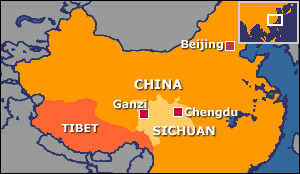 A Chinese court has sentenced two ethnic Tibetan men to death for setting off a series of bombs in the south-west of China. The court found the men guilty of three separate attacks, one of which killed a bystander. Chinese media says the men were also found guilty of possessing guns for separatist activities. One of the men's death sentence was later suspended for two years. China has long accused Tibetan pro-independence activists of a campaign of violence against Chinese targets. Unusual publicity But the BBC's Rupert Wingfield-Hayes in Beijing says details of actual incidents rarely get reported. In this case, the two Tibetan men were arrested in April this year, shortly after a bomb went off in the centre of Chengdu, the capital of south-west China's Sichuan province. On Monday, a court in Sichuan found them guilty of that bombing and of two earlier attacks in towns in the far west of the province. The earlier attacks are reported to have killed one person and injured a number of others. Both of the Tibetan men are reported to come from the town of Ganzi, in the far west part of Sichuan bordering Tibet. The area has a majority Tibetan population and has long been a hotbed of pro-Tibetan independence activity. The town of Ganzi has faced repeated crackdowns by Chinese police trying to root out pro-independence activists. Western Sichuan was originally known as Cham and was historically part of Tibet. After the Communists came to power in China in 1949, they amalgamated Cham into Sichuan province. Two years later, in 1951, China's People's Liberation Army invaded and occupied the rest of Tibet. | |
See also:  10 Oct 02 | Asia-Pacific 12 Nov 02 | Asia-Pacific 30 Sep 02 | Asia-Pacific 10 Feb 02 | Asia-Pacific Internet links: The BBC is not responsible for the content of external internet sites Top Asia-Pacific stories now: Links to more Asia-Pacific stories are at the foot of the page. | ||||||||||||||||||||||||||||||||||||||||||||||||||||||||||||||||||||||||||||||||||||||||||||||||||||||||||||||||||||||||||||||||||||||||||||||||||||||||||||||||||||||||||||||||||||||||||||||||||||||||||||||||||||||
| |
|  E-mail this story to a friend E-mail this story to a friend |
| |
| Links to more Asia-Pacific stories |
| | | ||
 | ||||
 | | Back to top
| ||
| ---------------------------------------------------------------------------------- To BBC Sport>> | To BBC Weather>> | To BBC World Service>> ---------------------------------------------------------------------------------- © MMIII | News Sources | Privacy |