|
 |
 | | | | | | |||||||||||||||||||||||||||||||||||||||||||||||||||||||||||||||||||||||||||||||||||||||||||||||||||||||||||||||||||||||||||||||||||||||||||||||||||||||||||||||
| | | You are in: Asia-Pacific | |||||||||||||||||||||||||||||||||||||||||||||||||||||||||||||||||||||||||||||||||||||||||||||||||||||||||||||||||||||||||||||||||||||||||||||||||||||||||||||||||
|
| | Saturday, 9 November, 2002, 17:48 GMT Bushfires rage in eastern Australia 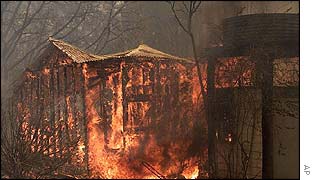 Bushfires have been exacerbated by the drought About 3,000 firefighters are battling blazes in eastern Australia in what is being described as one of the country's worst bushfire seasons. Up to 100 fires are burning in the state of New South Wales (NSW), with 35 out of control. Firefighters say their resources are stretched to the limit and are being hampered by strong winds and low humidity.
Elsewhere between five and 10 homes were burnt down in Mittagong, to the south-west of Sydney. Other industrial buildings caught fire and the main highway linking Sydney with the capital Canberra had to be closed. "It looks like a war zone," one local resident told reporters. Thick black smoke hung over Mittagong and residents tried to ward off the flames by drenching gutters and roofs with water, Reuters news agency said.
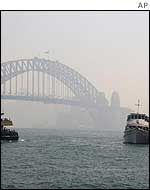
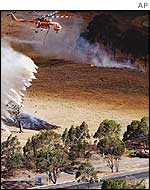
Two helicopters water-bombed the blaze but failed to get it under control "It's a very difficult situation, with crews reporting firestorm-like activities in the area", a spokesman for the Rural Fire Service said. "Wind gusts of up to 60 kilometres per hour and very low humidity levels are proving a great challenge," John Winter said. Officials are investigating whether arsonists are to blame for the fire at Mittagong, which is believed to have started in a bush near a road. The authorities predict that fire conditions will remain extreme over the next few days and have expressed concern that homes could be threatened by bushfires near Wollongong - about 50km south of Sydney - and the Blue Mountains, to the west of the city. Extreme drought Sydney itself was blanketed in smog on Friday. Smaller fires are also burning in the state of Queensland and parts of the Australian Capital Territory. A total fire ban been declared across New South Wales and many national parks were closed to prevent visitors accidentally causing fires. The bushfire season usually runs from December to February, when summer's heat sends temperatures above 40 degrees Celsius (104 degrees Fahrenheit). But this year the fires began months early, thanks to a drought affecting 70% of Australia. Last year, dozens of homes were destroyed by hundreds of fires around Sydney over Christmas and New Year. | | See also:  08 Nov 02 | Asia-Pacific 08 Oct 02 | Asia-Pacific 13 Jun 02 | Americas 07 Jan 02 | Science/Nature Internet links: The BBC is not responsible for the content of external internet sites Top Asia-Pacific stories now: Links to more Asia-Pacific stories are at the foot of the page. | |||||||||||||||||||||||||||||||||||||||||||||||||||||||||||||||||||||||||||||||||||||||||||||||||||||||||||||||||||||||||||||||||||||||||||||||||||||||||||||||
| |
|  E-mail this story to a friend E-mail this story to a friend |
| |
| Links to more Asia-Pacific stories |
| | | ||
 | ||||
 | | Back to top
| ||
| ---------------------------------------------------------------------------------- To BBC Sport>> | To BBC Weather>> | To BBC World Service>> ---------------------------------------------------------------------------------- © MMIII | News Sources | Privacy |