|
 |
 | | | | | | |||||||||||||||||||||||||||||||||||||||||||||||||||||||||||||||||||||||||||||||||||||||||||||||||||||||||||||||||||||||||||||||||||||||||||||||||||||||||||||||||||||||||
| | | You are in: Asia-Pacific | |||||||||||||||||||||||||||||||||||||||||||||||||||||||||||||||||||||||||||||||||||||||||||||||||||||||||||||||||||||||||||||||||||||||||||||||||||||||||||||||||||||||||||
|
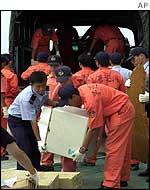
| | Tuesday, 4 June, 2002, 07:27 GMT 08:27 UK Taiwan's painstaking crash investigation Investigators will try to piece the wreckage together
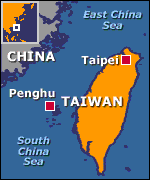
Relatives of the 225 people who died when flight CI 611 plunged into the sea off the island of Penghu on 25 May desperately want to know the cause of the crash. But officials from Taiwan's Aviation Safety Council (ASC), which is investigating the incident, have so far been unable to draw any firm conclusions.
The recovery of wreckage has been focused on an area of sea about 12 nautical miles north of Penghu, where the plane's two "black boxes" - voice and flight data recorders - and parts of the fuselage were located. Experts, including deep-sea recovery specialists from American Underwater Search and Survey Ltd, have been using an underwater camera attached to a remote-controlled vehicle to pin-point pieces of the airliner. A crane mounted on a barge is on stand-by to lift wreckage to the surface, although this operation has been hampered by rough seas in the Taiwan Strait. Expert help Once individual pieces have been collected, they are being taken to a hanger at Makung Air Force Base, on Penghu, where they are analysed by an ASC team. Officials will number each piece and then try to work out which part of the Boeing 747-200 it came from.
Investigator Tai said: "The cause of the crash is still unknown so it's important we don't lose any evidence or any piece of wreckage." Helping the Taiwanese team are officials from the US National Transportation Safety Board and the Federal Aviation Administration. Two Boeing officials, one structural expert and an accident investigator, are also helping to sift through the evidence after being invited to join the recovery efforts. Crash theories As well as searching for parts of the airliner, which crashed about 20 minutes into a flight from Taipei to Hong Kong, investigators are also looking at other evidence for the possible cause of the crash.
And a special team of police officers is looking into the backgrounds of all passengers and crew members to see if they had any reason to cause the crash. Officers are checking their insurance status, family members and their activities just before the crash happened. Companies that had cargo on the plane are also being screened. Early on investigators ruled out bad weather as a cause of the crash after checking conditions at the time of the accident. Taiwanese military officials also quickly moved to quell speculation that the aircraft had been hit by a missile fired by either themselves or China. But so far there are not many certainties. One of the few things the ASC will say is that the plane broke up more than 30,000 feet, with parts flying off in four separate directions. Needing answers Boeing spokeswoman Liz Verdier said investigations like this often took a long time. "People want, and society expects, quick answers," she said. "But there won't be answers that quickly because aircraft are complicated machines and we have to make sure we get the right answers." It took seven months to find 80% of the wreckage of a TWA Boeing 747-100 that crashed off the coast of Long Island, New York, in 1996, and four years before the final report into the crash was released. According to the Tzu Chi Buddhist Foundation, which is helping to comfort relatives, some victims' families have stopped holding a grudge against China Airlines and the government over the crash, although many bodies have still not been recovered. Its volunteers said many relatives had expressed their gratitude to the rescue teams by writing thank-you letters and visiting them in person. Even so, they will be hoping investigators discover the cause of the crash sooner rather than later. | | See also:  02 Jun 02 | Asia-Pacific 31 May 02 | Asia-Pacific 30 May 02 | Asia-Pacific 27 May 02 | Asia-Pacific 26 May 02 | Asia-Pacific 25 May 02 | Asia-Pacific 26 May 02 | In Depth 21 Mar 02 | Country profiles Top Asia-Pacific stories now: Links to more Asia-Pacific stories are at the foot of the page. | |||||||||||||||||||||||||||||||||||||||||||||||||||||||||||||||||||||||||||||||||||||||||||||||||||||||||||||||||||||||||||||||||||||||||||||||||||||||||||||||||||||||||
| |
|  E-mail this story to a friend E-mail this story to a friend |
| |
| Links to more Asia-Pacific stories |
| | | ||
 | ||||
 | | Back to top
| ||
| ---------------------------------------------------------------------------------- To BBC Sport>> | To BBC Weather>> | To BBC World Service>> ---------------------------------------------------------------------------------- © MMIII | News Sources | Privacy |