|
 |
 | | | | | | ||||||||||||||||||||||||||||||||||||||||||||||||||||||||||||||||||||||||||||||||||||||||||||||||||||||||||||||||||||||||||||||||||||||||||||||||||||||||||||||||||||||||||||||||||||||||||||||||||||||||||||||||||||||||||||||||||||||||
| | | You are in: Americas | ||||||||||||||||||||||||||||||||||||||||||||||||||||||||||||||||||||||||||||||||||||||||||||||||||||||||||||||||||||||||||||||||||||||||||||||||||||||||||||||||||||||||||||||||||||||||||||||||||||||||||||||||||||||||||||||||||||||||||
|
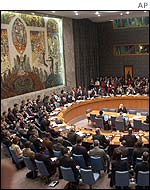
| | Tuesday, 28 January, 2003, 12:05 GMT ElBaradei statement: Key excerpts  ElBaradei says the inspection process can work in time Extracts from International Atomic Energy Agency (IAEA) chief Mohamed ElBaradei's statement to the UN Security Council on progress in the search for nuclear weapons in Iraq. "Over these first two months of inspection, we have made good progress in our knowledge of Iraq's nuclear capabilities, with a total of 139 inspections at some 106 locations to date.
"All inspection activities have been carried out without prior notification to Iraq, except where notification was needed to ensure the availability of required support. "IAEA inspectors have taken - and will continue to take - full advantage of the inspection authority granted by resolution 1441. In doing so, the inspectors have been instructed to make every effort to conduct their activities with appropriate professionalism and sensitivity. Unanswered questions "While we are continuing to some extent with this reconnaissance work, our inspections are now well into the 'investigative' phase - with particular emphasis on determining what, if anything, has occurred in Iraq over the past four years relevant to the re-establishment of nuclear capabilities.
"In parallel with these inspection activities, the IAEA has been conducting exhaustive analysis of supporting information obtained from various sources. "In this context, we have integrated the new information submitted by Iraq - including the declaration submitted on 7 December in response to resolution 1441 - with the records we had accumulated between 1991 and 1998 and the additional information we had compiled through remote monitoring since 1998. "The Iraqi declaration was consistent with our existing understanding of Iraq's pre-1991 nuclear programme; however, it did not provide any new information relevant to certain questions that have been outstanding since 1998 - in particular regarding Iraq's progress prior to 1991 related to weapons design and centrifuge development. "While these questions do not constitute unresolved disarmament issues, they nevertheless need further clarification. Interview problems "In addition to on-site inspection and off-site analysis, IAEA inspectors have employed a variety of tools to accomplish their mission.
"A broad variety of environmental samples and surface swipe samples have been collected from locations across Iraq and taken to IAEA laboratories for analysis. "And we have re-instituted routine car-borne and hand-held gamma surveys for the detection of undeclared nuclear material. "The inspectors have also conducted a great number of interviews of Iraqi scientists, managers and technicians - primarily in the workplace in the course of unannounced inspections - as a valuable source of information about past and present programmes and activities. "The information gained has been helpful in assessing the completeness and accuracy of Iraq's declarations. "Resolution 1441 also clearly gave to the IAEA and Unmovic [UN Monitoring, Inspection and Verification Commission] the authority to determine the modalities and venues for conducting interviews with Iraqi officials and other persons. "The first two individuals whom the IAEA requested to see privately declined to be interviewed without the presence of an Iraqi Government representative.
"Although the Iraqi Government recently committed itself to encouraging Iraqi officials and other personnel to be interviewed in private when requested, regrettably the third request, two days ago, for a private interview was again turned down by the interviewee. "The IAEA will continue to determine the modalities and locations of the interviews, including the possibility of interviewing Iraqi personnel abroad. "We will continue to report to the Security Council on our efforts to conduct interviews according to our preferred modalities and venues, and our degree of success in that regard... Findings
Looking ahead "In addition to the new authorities granted by resolution 1441, I believe that the unified resolve of the council to support the inspection process has been a vital ingredient, and must remain so, if we are to achieve a peaceful resolution of the situation in Iraq. I trust that the council would continue its unified and unequivocal support for the inspection process in Iraq. "Over the next several months, inspections will focus ever more closely on follow-up of specific concerns, as we continue to conduct visits to sites and interviews with key Iraqi personnel. We have begun helicopter operations, which increase the inspectors' mobility and their ability to respond rapidly to new information, and allow wide-scale radiation detection surveys.
"By its very nature, the inspection process, both in Iraq and elsewhere, is not based on 'trust', but on a thorough process of fact-finding, supported by access to all available information. Where applicable, this should include information available to states that may be relevant to the purpose of the inspection. We have begun in the last few weeks to receive more actionable information from states - that is, information of direct and current value for inspection follow-up. "I would continue to call on states that have access to such information to provide it to the inspecting organisations, so that the inspection process can be accelerated and additional assurances can be generated. More co-operation "Finally, we have urged Iraq once again to increase the degree of its co-operation with the inspection process.
"In our discussions with Iraqi officials last week in Baghdad, we emphasised the need to shift from passive support - that is, responding as needed to inspectors' requests - to pro-active support - that is, voluntarily assisting inspectors by providing documentation, people and other evidence that will assist in filling in the remaining gaps in our information. "One example of how Iraq could be more pro-active was illustrated by the inspection of a private residence just two weeks ago, which resulted in the retrieval of a sizeable number of documents, some of which were classified, and related, in part, to Iraq's pre-1991 efforts to use laser technology for enriching uranium. "While these documents do not appear to reflect new or current activity related to nuclear weapons in Iraq, they may enhance our detailed understanding of certain aspects of Iraq's pre-1991 nuclear programme. It is urgent and essential therefore that Iraq, on its own initiative, identify and provide any additional evidence that would assist the inspectors in carrying out their mandate. "This pro-active engagement on the part of Iraq would be in its own best interest and is a window of opportunity that may not remain open for very much longer. "Iraq should make every effort to be fully transparent - with a demonstrated willingness to resolve issues rather than requiring pressure to do so. The international community will not be satisfied when questions remain open with regard to Iraq's weapons of mass destruction; the world is asking for a high level of assurance that Iraq is completely free from all such weapons, and is already impatient to receive it. The sooner such assurance can be provided by the inspecting organisations, the sooner the prospects of a peaceful resolution will translate into a plausible reality. No evidence "Inspections are time-consuming but, if successful, can ensure disarmament through peaceful means. It is worth recalling that, in our past experience in Iraq, the elimination of its nuclear weapons programme was mostly accomplished through intrusive inspections. It is also worth recalling that the presence of international inspectors in Iraq today continues to serve as an effective deterrent to and insurance against resumption of programmes to develop weapons of mass destruction, even as we continue to look for possible past activities. "We have to date found no evidence that Iraq has revived its nuclear weapons programme since the elimination of the programme in the 1990s. "However, our work is steadily progressing and should be allowed to run its natural course. With our verification system now in place, barring exceptional circumstances, and provided there is sustained pro-active cooperation by Iraq, we should be able within the next few months to provide credible assurance that Iraq has no nuclear weapons programme. "These few months would be a valuable investment in peace because they could help us avoid a war. "We trust that we will continue to have your support as we make every effort to verify Iraq's nuclear disarmament through peaceful means, and to demonstrate that the inspection process can and does work, as a central feature of the international nuclear arms control regime." | |
See also:  27 Jan 03 | Americas 27 Jan 03 | Middle East 27 Jan 03 | Europe 26 Jan 03 | Americas 26 Jan 03 | Americas 24 Jan 03 | Middle East 19 Nov 02 | Middle East 22 Jan 03 | Country profiles 27 Jan 03 | Middle East 27 Jan 03 | Americas 27 Jan 03 | Middle East Internet links: The BBC is not responsible for the content of external internet sites Top Americas stories now: Links to more Americas stories are at the foot of the page. | ||||||||||||||||||||||||||||||||||||||||||||||||||||||||||||||||||||||||||||||||||||||||||||||||||||||||||||||||||||||||||||||||||||||||||||||||||||||||||||||||||||||||||||||||||||||||||||||||||||||||||||||||||||||||||||||||||||||||
 | |
|  E-mail this story to a friend E-mail this story to a friend |
| |
| Links to more Americas stories |
| | | ||
 | ||||
 | | Back to top
| ||
| ---------------------------------------------------------------------------------- To BBC Sport>> | To BBC Weather>> | To BBC World Service>> ---------------------------------------------------------------------------------- © MMIII | News Sources | Privacy |





 We have to date found no evidence that Iraq has revived its nuclear weapons programme since the elimination of the programme in the 1990s