|
 |
 | | | | | | |||||||||||||||||||||||||||||||||||||||||||||||||||||||||||||||||||||||||||||||||||||||||||||||||||||||||||||||||||||||||||||||||||||||||||||||||||||||||||||||||||||||||||||
| | | You are in: Americas | |||||||||||||||||||||||||||||||||||||||||||||||||||||||||||||||||||||||||||||||||||||||||||||||||||||||||||||||||||||||||||||||||||||||||||||||||||||||||||||||||||||||||||||||
|
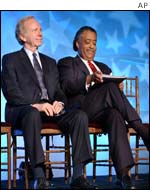
| | Thursday, 23 January, 2003, 16:12 GMT Democrats' beauty contest  A pro-choice rally brought the contenders together
But already six challengers have declared their candidacy, and this week they appeared together for the first time at a pro-abortion rally in Washington.
Measured by applause alone, the pro-choice crowd offered their greatest support to the two candidates many think have the least chance of gaining the Democratic presidential nomination - black civil rights leader Al Sharpton and former Vermont governor Howard Dean. Mr Dean joked that Mr Sharpton had offered him the vice-presidential nomination.
But perhaps the two men's greatest strength at the rally was their option to speak more openly than the mainstream candidates on abortion - a touchstone issue for Democratic activists. Mr Dean spoke from his perspective as a former doctor about the need to protect young vulnerable women who might need abortions from having to tell their parents. And it is Mr Dean's frankness - on abortion, health care, and the war on Iraq - which is gaining him supporters in early canvassing in Iowa and New Hampshire, the site of the first Democratic primaries in just over one year. Personal convictions The Democrats believe that pro-choice views among suburban women might just be the key towards their winning the presidency.
That could have created problems for one Democratic contender, the former leader in the House of Representatives, Dick Gephardt, who started his career opposed to abortion. But Mr Gephardt was able to win over his audience by telling the story of his personal journey from Baptist-educated anti-abortion convictions to support for the pro-choice lobby. He told the 2,000 activists gathered at the fundraising dinner at the swank Shoreham hotel: "The questions of morality are not always simple - but the greatest teacher is wisdom, gained over time from personal stories and personal revelation, from questioning and introspection." Mr Gephardt, who has built a strong base among labour unions in the US through his protectionist trade views, will need to reach out to other Democratic constituencies to have a chance of gaining the nomination. Frontrunners look weak The early returns from the big abortion rally could also signal trouble for two of the frontrunners for the nomination. North Carolina Senator John Edwards - considered the Democrats' best hope of reaching out to the South - failed to make much impact with his speech, despite promising to introduce a bill that would enshrine the pro-abortion court decision Roe v Wade into law. His lacklustre delivery style, as well as his failure to connect with the audience and relatively low name recognition, could make it difficult for him to gain success in the Democratic primary elections next year.
Mr Lieberman is a conservative Democrat, who likes to emphasise his family values. He told the audience that abortion should be "rare" even if legal, and said his aim was to "strengthen the fabric of the American family and the right of privacy". "Neither side has a monopoly of values in this debate - and those on the other side who claim they do are just plain wrong," he said. Such a mainstream appeal to oppose extremism by anti-abortion activists was designed to appeal to the wider audience of moderate centrists. But that highlights Mr Lieberman's dilemma. His appeal to so-called swing voters may give him a better chance of defeating President Bush - but it weakens his chance of actually winning the nomination, where the electorate is a more narrow base of Democratic activists. Wooing female vote Another Democratic hopeful did seem to live up to his billing, however. Massachusetts Senator John Kerry is generally considered to be the strongest Democratic candidate on matters of war and peace. He linked the fight for abortion to a wider "war against women" which he said was "about power and who decides". And he said that if he was in a presidential debate he would make "trusting women to make their own decisions" the defining issue between him and Mr Bush. Mr Kerry's experience as a prosecutor in Massachusetts - a liberal state that is the home of the Kennedy clan - also helped his appeal. But it will be up to the Democrats between now and the next election to reach out from their natural base in states like Massachusetts to win across the rural West and South - areas where the strong anti-abortion stand evidenced by all the candidates so far may not be so popular. | | See also:  22 Jan 03 | Americas 22 Jan 03 | Americas 13 Jan 03 | Americas 03 Jan 03 | Americas 17 Dec 02 | Americas 06 Nov 02 | Americas Internet links: The BBC is not responsible for the content of external internet sites Top Americas stories now: Links to more Americas stories are at the foot of the page. | |||||||||||||||||||||||||||||||||||||||||||||||||||||||||||||||||||||||||||||||||||||||||||||||||||||||||||||||||||||||||||||||||||||||||||||||||||||||||||||||||||||||||||||
 | |
|  E-mail this story to a friend E-mail this story to a friend |
| |
| Links to more Americas stories |
| | | ||
 | ||||
 | | Back to top
| ||
| ---------------------------------------------------------------------------------- To BBC Sport>> | To BBC Weather>> | To BBC World Service>> ---------------------------------------------------------------------------------- © MMIII | News Sources | Privacy |






 Questions of morality are not always simple