|
 |
 | | | | | | ||||||||||||||||||||||||||||||||||||||||||||||||||||||||||||||||||||||||||||||||||||||||||||||||||||||||||||||||||||||||||||||||||||||||||||||||||||||||||||||||||||||||||||||||||||||||||||||||||||||||||
| | | You are in: Americas | ||||||||||||||||||||||||||||||||||||||||||||||||||||||||||||||||||||||||||||||||||||||||||||||||||||||||||||||||||||||||||||||||||||||||||||||||||||||||||||||||||||||||||||||||||||||||||||||||||||||||||||
|
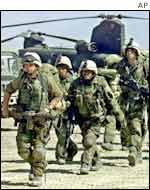
| | Friday, 27 December, 2002, 17:11 GMT Campaigners demand US 'torture' probe  Observers can visit Guantanamo - but not Bagram Human rights campaigners have urged the United States to investigate allegations that suspected al-Qaeda and Taleban detainees are being tortured. In a letter to President George W Bush, the New York-based Human Rights Watch (HRW) says immediate steps must be taken "to clarify that the use of torture is not US policy". The group says that otherwise the Bush administration risked criminal prosecution.
The newspaper said suspects at US facilities in Afghanistan and other foreign countries are sometimes held in uncomfortable positions for hours and deprived of sleep. It says some of those who refuse to co-operate are handed over to foreign governments that are known to practise torture and other forms of mistreatment. "US officials who take part in torture, authorise it, or even close their eyes to it, can be prosecuted by courts anywhere in the world," Kenneth Roth, HRW's executive director, said. However, US officials quoted in the report insist they neither use nor condone the use of torture. Cold comfort "The picture that emerges is of a brass-knuckled quest for information (...) in which the traditional lines between right and wrong, legal and inhumane, are evolving and blurred," the Washington Post wrote.
Unlike the detention centre at Guantanamo Bay in Cuba - where journalists and Red Cross officials are occasionally allowed to monitor detention conditions - the CIA's overseas interrogation facilities are off-limits to outsiders, the Washington Post reported. Those who cooperate are rewarded with "creature comforts": interrogators whose methods include feigned friendship, respect, cultural sensitivity and, in some cases, money. Those who refuse to co-operate are sometimes kept standing or kneeling for long periods, in black hoods or spray-painted goggles, according to experts quoted in the report.
One official quoted by the newspaper explains: "We don't kick the [expletive] out of them. We send them to other countries so they can kick the [expletive] out of them." 'Cultural intimacy' US officials who defend the practice say the prisoners are sent to other countries not because of their tougher interrogation methods, but because of their cultural affinity with the captives. Besides being illegal, they say, torture produces dubious information from suspects who are desperate to stop the pain. The US turns to foreign allies more because their intelligence officers can develop a culture of intimacy that Americans cannot, those officials say. CIA director George Tenet has said that interrogations overseas have yielded results. "Almost half of our successes against senior al-Qaeda members have come in recent months," he said in a speech earlier this month. Former terror suspects who have been freed from the Guantanamo Bay facility have described harsh conditions inside the camp - but said they were not beaten. | |
See also:  02 Dec 02 | Americas 19 Nov 02 | South Asia 29 Oct 02 | South Asia 16 Sep 02 | South Asia 02 Sep 02 | South Asia 30 Apr 02 | Americas Internet links: The BBC is not responsible for the content of external internet sites Top Americas stories now: Links to more Americas stories are at the foot of the page. | ||||||||||||||||||||||||||||||||||||||||||||||||||||||||||||||||||||||||||||||||||||||||||||||||||||||||||||||||||||||||||||||||||||||||||||||||||||||||||||||||||||||||||||||||||||||||||||||||||||||||||
 | |
|  E-mail this story to a friend E-mail this story to a friend |
| |
| Links to more Americas stories |
| | | ||
 | ||||
 | | Back to top
| ||
| ---------------------------------------------------------------------------------- To BBC Sport>> | To BBC Weather>> | To BBC World Service>> ---------------------------------------------------------------------------------- © MMIII | News Sources | Privacy |





 US officials who take part in torture, authorise it, or even close their eyes to it, can be prosecuted by courts anywhere in the world