|
 |
 | | | | | | |||||||||||||||||||||||||||||||||||||||||||||||||||||||||||||||||||||||||||||||||||||||||||||||||||||||||||||||||||||||||||||||||||||||||||||||||||||||||||||||||||||||||||||||||||||||||||||||||||||||||
| | | You are in: Americas | |||||||||||||||||||||||||||||||||||||||||||||||||||||||||||||||||||||||||||||||||||||||||||||||||||||||||||||||||||||||||||||||||||||||||||||||||||||||||||||||||||||||||||||||||||||||||||||||||||||||||||
|
| | Friday, 13 December, 2002, 20:14 GMT Bush to get smallpox jab 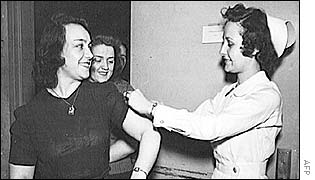 The US stopped routine vaccinations 30 years ago US President George W Bush has said he will receive the same smallpox inoculation he has now ordered for all military personnel.
But his wife and daughters will not get the jab, with the administration keen to persuade civilians there is no immediate threat of a biological attack and they do not need it. Mr Bush said US authorities had been preparing its options for a possible biological attack for a year and had stockpiled enough vaccine to protect the entire population. But though he said the smallpox virus could be used as "a weapon of terror" there was no evidence of "imminent danger". "Our government has no information that a smallpox attack is imminent, yet it is prudent to prepare for the possibility that terrorists who kill indiscriminately would use diseases as a weapon," Mr Bush said. Risks About 500,000 service people and US personnel in areas deemed dangerous will be at the forefront of the vaccination programme. And as there is a slight medical risk from the jab, Mr Bush said he would have it himself. "As commander-in-chief, I do not believe I can ask others to accept this risk unless I am willing to do the same. Therefore I will receive the vaccine along with our military.
"Given the current level of threat and the inherent health risks of the vaccine, we have decided not to initiate a broader vaccination programme for all Americans at this time. "Neither my family nor my staff will be receiving the vaccine because our health and national security experts do not believe vaccination is necessary for the general public." Jabs on demand Voluntary vaccinations would be available for medical and emergency staff who would be on the front lines of any biological attack. Citizens who wanted the inoculation despite the repeated assurances that it was not necessary would also be accommodated, the president said.
Based on studies from the 1960s, when inoculation was widespread, 15 out of every million people vaccinated for the first time will face life-threatening complications, and one or two will die. Therefore statistically, if the entire US population was vaccinated, the vaccine itself would kill just under 200 people. Smallpox was eradicated worldwide more than 20 years ago, but intelligence analysts believe that at least four countries, including Iraq, have illegal stocks of the virus. Routine smallpox vaccinations ended in 1972, meaning that nearly half the population is without any protection from the deadly virus - which has a mortality rate of about 30%. | |
See also:  02 Dec 02 | Health 12 Dec 02 | Americas 23 Sep 02 | Americas 03 Dec 02 | Health 29 Aug 02 | Health 18 May 02 | Health Internet links: The BBC is not responsible for the content of external internet sites Top Americas stories now: Links to more Americas stories are at the foot of the page. | |||||||||||||||||||||||||||||||||||||||||||||||||||||||||||||||||||||||||||||||||||||||||||||||||||||||||||||||||||||||||||||||||||||||||||||||||||||||||||||||||||||||||||||||||||||||||||||||||||||||||
| |
|  E-mail this story to a friend E-mail this story to a friend |
| |
| Links to more Americas stories |
| | | ||
 | ||||
 | | Back to top
| ||
| ---------------------------------------------------------------------------------- To BBC Sport>> | To BBC Weather>> | To BBC World Service>> ---------------------------------------------------------------------------------- © MMIII | News Sources | Privacy |





 As commander-in-chief, I do not believe I can ask others to accept this risk unless I am willing to do the same - therefore I will receive the vaccine along with our military