|
 |
 | | | | | | ||||||||||||||||||||||||||||||||||||||||||||||||||||||||||||||||||||||||||||||||||||||||||||||||||||||||||||||||||||||||||||||||||||||||||||||||||||||||||||||||||||||||||||||||||||||||||||||
| | | You are in: Americas | ||||||||||||||||||||||||||||||||||||||||||||||||||||||||||||||||||||||||||||||||||||||||||||||||||||||||||||||||||||||||||||||||||||||||||||||||||||||||||||||||||||||||||||||||||||||||||||||||
|
| | Friday, 11 October, 2002, 23:33 GMT 00:33 UK US hawks target Middle East 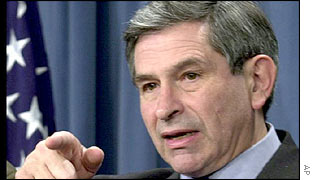 Paul Wolfowitz is the chief US ideologue
Beyond the talk of Saddam Hussein and weapons inspectors, there is another factor at play in the White House war plans - ideology. Some of the president's most senior advisors believe that the overthrow of Saddam Hussein is just the first stage in a long-term vision of change for the Middle East. Installing a democracy in Iraq, even an imperfect version of it, would send shock waves through the region, the hawks argue. They believe that Syria, Saudi Arabia and Egypt would be put on the spot and forced to become more democratic.
Democracy would reduce the frustration of ordinary Arabs, reduce their appetite for radical Islam, improve relations with the United States and add a new element to the Israeli-Palestinian issue. The intellectual underpinning of this vision comes from Paul Wolfowitz, a former academic who is now deputy secretary of defence. But these views are also shared by his boss, Defence Secretary Donald Rumsfeld, as well as the vice-president and the president. Regional change None of them accepts the conventional wisdom that the Middle East is insoluble. They believe they can change it for the better, starting with Iraq. From there, the argument goes, other benefits will flow. Once Saddam has gone, there would be less requirement for American troops in Saudi Arabia. That would remove another major source of anti-Americanism, and undercut support for al-Qaeda. Since America is the one expending military capital in liberating Iraq, you can be sure American companies would be given the best contracts in the reconstruction and access to Iraq's oil. Saudi displeasure This would reduce America's reliance on Saudi Arabia even further. In fact, this administration has no qualms about upsetting the Saudis. To the fury of the Saudi royal family, Saudi visitors to America are now routinely fingerprinted and searched. They have lost the special status they enjoyed under the presidency of George Bush senior.
American foreign policy should be 'forward leaning', not shy about interceding - some would say interfering - in conflicts. All this the hawks have believed for some time. But before 11 September, their ideas never got beyond theoretical policy papers. The attacks gave them the opportunity they needed to test out their ideologies in practice. Buoyed by the relatively painless experience in Afghanistan, they are now ready for Iraq. | |
See also:  11 Oct 02 | Europe 11 Oct 02 | Americas 11 Oct 02 | Asia-Pacific 09 Oct 02 | Middle East 09 Oct 02 | Middle East 09 Oct 02 | Science/Nature 09 Oct 02 | Americas 08 Oct 02 | Americas 08 Oct 02 | Americas 02 Oct 02 | Americas Internet links: The BBC is not responsible for the content of external internet sites Top Americas stories now: Links to more Americas stories are at the foot of the page. | ||||||||||||||||||||||||||||||||||||||||||||||||||||||||||||||||||||||||||||||||||||||||||||||||||||||||||||||||||||||||||||||||||||||||||||||||||||||||||||||||||||||||||||||||||||||||||||||
| |
|  E-mail this story to a friend E-mail this story to a friend |
| |
| Links to more Americas stories |
| | | ||
 | ||||
 | | Back to top
| ||
| ---------------------------------------------------------------------------------- To BBC Sport>> | To BBC Weather>> | To BBC World Service>> ---------------------------------------------------------------------------------- © MMIII | News Sources | Privacy |