|
 |
 | | | | | | ||||||||||||||||||||||||||||||||||||||||||||||||||||||||||||||||||||||||||||||||||||||||||||||||||||||||||||||||||||||||||||||||||||||||||||||||||||||||||||||||||||||||||||||||||||||||||||||||||||||||||||||||||||||||||||||||||||||||||||||||||
| | | You are in: Americas | ||||||||||||||||||||||||||||||||||||||||||||||||||||||||||||||||||||||||||||||||||||||||||||||||||||||||||||||||||||||||||||||||||||||||||||||||||||||||||||||||||||||||||||||||||||||||||||||||||||||||||||||||||||||||||||||||||||||||||||||||||||
|
| | Friday, 11 October, 2002, 11:28 GMT 12:28 UK Strong hand for Bush 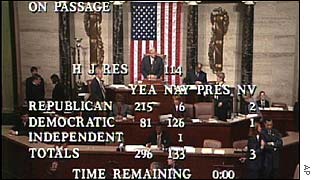 Backing was stronger than Bush senior's in 1991
Patriotism has become a major factor in American society since 11 September 2001.
The speed with which the Senate rallied to the resolution passed first by the House of Representatives showed how anti-war sentiment has been overwhelmed in a rush to support the President. It had been thought that the Senate would take a little more time and be a little more cautious in the powers it approved. Democrats as well as Republicans flocked to the colours, influenced partly perhaps by the prospect that doubters might be damaged in the forthcoming midterm elections on 5 November and in the presidential election in 2004. 'With one voice' The two Democrat leaders, Senator Tom Daschle and Congressman Richard Gephardt - both spoken of as possible presidential candidates - voted in favour of the war powers. The mild-mannered Mr Daschle was reluctant but Mr Gephardt was keen and helped frame the resolution himself.
Mr Gephardt said that diplomacy should be given "the best possible opportunity" but that "further steps" would be taken "if necessary to protect our nation". Sentiment on the Republican side was forcefully summed up by Mr Bush's former presidential rival, Senator John McCain, a Vietnam veteran. Saddam Hussein's defiance, he said "if not ended, is a threat to every nation that claims membership in the civilised world".
General Anthony Zinni, the former head of Central Command - which would be in charge of an attack on Iraq - echoed these doubts. "I'm not convinced we need to do this now," he said. George Bush did even better than his father did in when he got Congressional approval for war against Iraq in 1991. Forty-eight hours The heart of resolution itself, stripped of no less than 23 preliminary clauses starting with "Whereas", gives Mr Bush the power to "defend the national security of the United States against the continuing threat posed by Iraq" and to "enforce all relevant Security Council resolutions regarding Iraq".
But in essence, the president has the right to determine himself what to do and when. He has chosen to go through the Security Council for now, but has his political back covered if that route to Iraqi disarmament is blocked and he turns to war. The US and Britain have still not, however, got agreement among the five permanent members of the council as to the way forward. Russia reluctant Russia is being wooed by the British Prime Minister Tony Blair on a visit to President Vladimir Putin. There is talk of Russia being given assurances that it would not lose out financially if there is "regime change" in Iraq. But Russia is reluctant to authorise force too quickly and wants to give inspections a chance. So does France. Those diplomatic issues remain to be resolved. Mr Bush has meanwhile won a great political victory. | |
See also:  11 Oct 02 | Americas 11 Oct 02 | Americas 11 Oct 02 | Europe 09 Oct 02 | Middle East 09 Oct 02 | Science/Nature 09 Oct 02 | Americas 08 Oct 02 | Americas 08 Oct 02 | Americas Internet links: The BBC is not responsible for the content of external internet sites Top Americas stories now: Links to more Americas stories are at the foot of the page. | ||||||||||||||||||||||||||||||||||||||||||||||||||||||||||||||||||||||||||||||||||||||||||||||||||||||||||||||||||||||||||||||||||||||||||||||||||||||||||||||||||||||||||||||||||||||||||||||||||||||||||||||||||||||||||||||||||||||||||||||||||
| |
|  E-mail this story to a friend E-mail this story to a friend |
| |
| Links to more Americas stories |
| | | ||
 | ||||
 | | Back to top
| ||
| ---------------------------------------------------------------------------------- To BBC Sport>> | To BBC Weather>> | To BBC World Service>> ---------------------------------------------------------------------------------- © MMIII | News Sources | Privacy |