|
 |
 | | | | | | ||||||||||||||||||||||||||||||||||||||||||||||||||||||||||||||||||||||||||||||||||||||||||||||||||||||||||||||||||||||||||||||||||||||||||||||||||||||||||||||||||||||||||||||||||||||||||||||||||
| | | You are in: Americas | ||||||||||||||||||||||||||||||||||||||||||||||||||||||||||||||||||||||||||||||||||||||||||||||||||||||||||||||||||||||||||||||||||||||||||||||||||||||||||||||||||||||||||||||||||||||||||||||||||||
|
| | Sunday, 6 October, 2002, 21:02 GMT 22:02 UK US rethinks nation building 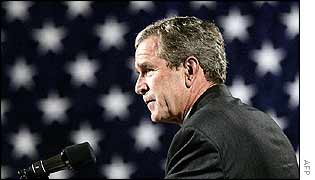 President Bush is ready to use US force
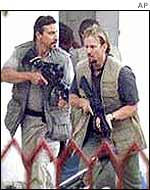
After the 11 September attacks, President George W Bush dismissed warnings that the US would have to rebuild Afghanistan if it removed the Taleban, saying: "We are not into nation building." A year later, America is very much into nation building. It has strongly supported the Afghan President Hamid Karzai and is even providing his bodyguard which worked to good effect during the recent assassination attempt.
The fact is that the new doctrine of pre-emptive action which George Bush has formulated requires the United States to engage in rebuilding a nation it has chosen to strike - otherwise the same threat which led to an intervention might return. Nation building is the child of regime change. Iraq regime change The pattern has been set in Afghanistan and is likely to be repeated in Iraq. If the removal of Saddam Hussein is sought, it will be achieved. Iraq will be unable to withstand American power for long. US air power can be deployed in the early 21st century as easily as British naval power was deployed in the mid 19th.
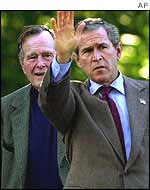
But there has to be a post-Saddam policy for Iraq. The nearer military action gets, the more we will begin to hear about who should replace him and how. It is quite a reverse from the decision taken by President George Bush senior who stopped his troops on the road to Baghdad in 1991, using as one argument the risk of having US troops staying in Iraq for months if not years. George Bush senior was not into nation building. George Bush junior now is. Palestinian pressure He has even laid down to the Palestinians how they should set about building themselves a nation. First elect a new leadership, he has told them, and then we will support your demand for nationhood. Yet, one should not be that surprised about the switch in policy. Many American presidents try to avoid what the founding fathers, especially Thomas Jefferson, feared would be foreign entanglements. Many also have to change their minds. Balkans crisis Take the Balkans as an example. Bill Clinton refused to intervene in Bosnia until almost forced to do so by political and public opinion. The Europeans (until Jacques Chirac became French President in 1995) were even more reluctant, especially the British.
Bismarck's remark that the Balkans were not worth the "bones of a single Pomeranian grenadier" was much quoted. But President Clinton did bomb the Bosnian Serbs in 1995 and then in 1999. He bombed Serbia itself to get Slobodan Milosevic out of Kosovo. American troops are still in Bosnia and are still in Kosovo. European scepticism That has not stopped critics in Europe from complaining that the US doesn't like being involved for the long term. Trust has not yet been established. "They can be quick to get in and quick to get out," said one former British official who dealt with Bosnia recently. Which is why US Secretary of State Colin Powell sought last year to allay allied fears that they would be pulled out by saying: "We went in together and we will come out together." But there are even bigger examples of nation building, American style. After World War II, the United States rebuilt West Germany and Japan as nations. It was determined not to repeat the error of the allies after World War I which simply punished the losers. America's back yard There are other, not always benign, examples. The United States has traditionally regarded Latin America as its back yard which it can keep in whatever order it prefers. This goes back to the 19th century Mexican war in which Mexico lost Texas and California, though that was perhaps America building its own nation by taking bits of someone else's.
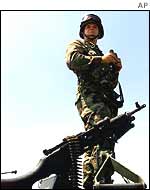
The pattern has continued in our day in Guatemala, Nicaragua and Chile. The Americans also forced regime change in Panama, Grenada and Haiti. It tried and failed in Cuba. Somalia was also a disaster. Now George W Bush has got drawn in as well. The website for the US Defense Department proudly declares: "The US military is currently deployed to more locations than it has been throughout history." | |
See also:  29 Sep 02 | South Asia 10 Jul 02 | Americas 01 Jul 02 | Americas 25 Jul 02 | South Asia Internet links: The BBC is not responsible for the content of external internet sites Top Americas stories now: Links to more Americas stories are at the foot of the page. | ||||||||||||||||||||||||||||||||||||||||||||||||||||||||||||||||||||||||||||||||||||||||||||||||||||||||||||||||||||||||||||||||||||||||||||||||||||||||||||||||||||||||||||||||||||||||||||||||||
| |
|  E-mail this story to a friend E-mail this story to a friend |
| |
| Links to more Americas stories |
| | | ||
 | ||||
 | | Back to top
| ||
| ---------------------------------------------------------------------------------- To BBC Sport>> | To BBC Weather>> | To BBC World Service>> ---------------------------------------------------------------------------------- © MMIII | News Sources | Privacy |