|
 |
 | | | | | | |||||||||||||||||||||||||||||||||||||||||||||||||||||||||||||||||||||||||||||||||||||||||||||||||||||||||||||||||||||||||||||||||||||||||||||||||||||||||||||||||||||||||||||||||||||||||||||
| | | You are in: Americas | |||||||||||||||||||||||||||||||||||||||||||||||||||||||||||||||||||||||||||||||||||||||||||||||||||||||||||||||||||||||||||||||||||||||||||||||||||||||||||||||||||||||||||||||||||||||||||||||
|
| | Tuesday, 3 September, 2002, 10:24 GMT 11:24 UK Is Washington in disarray over Iraq? 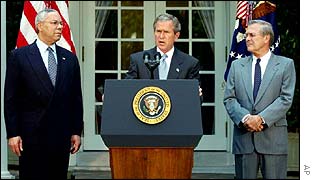 Hawks and Doves may be working together
The American Secretary of State, Colin Powell's low-key approach to Iraq expressed in an interview with the BBC in recent days has repeated a familiar theme - the Bush administration displaying its seemingly irreconcilable internal differences over how to deal with Baghdad. In his comments favouring a return to Iraq of United Nations weapons inspectors, Mr Powell described this as a '"first step" and said the world must be given evidence of the threat posed by the Iraqi leader Saddam Hussein before any military action is taken.
In his comments Mr Cheney delivered his clearest justification yet for action to overthrow Saddam Hussein, saying the risk of "inaction" was greater. But the supposedly conflicting sentiments which came from Mr Powell are not entirely new, and they do not differ substantially from what he has said since February this year in testimony before Congress. Doves v Hawks The secretary of state is of course the celebrated leader of the doves in an oft-acknowledged debate within the administration over the best course of action. Dick Cheney, along with the defence secretary Donald Rumsfeld, leads the hawks. It is the classic split between the departments of state and defence. Meanwhile the White House continues to insist that President Bush, who holds the power, has not made any decision on Iraq.
But there is another question often overlooked: Whether this is all a carefully stage-managed process in which Colin Powell's words are tailored to soothe the concerns of sceptical world leaders, while Dick Cheney and his cohorts provide the rhetoric for ardent supporters of action against Baghdad. This may be, but it certainly doesn't leave America's allies with any clarity. It is tempting to become obsessed with what has become a central aspect of this debate, namely the return of weapons inspectors. Many European leaders agree this is a crucial first step in exploring peaceful ways of resolving the issue. Work hampered These UN personnel left Iraq back in 1998 after saying their work in monitoring Iraq's weapons development was being hampered. To many it seems logical to push for their return before taking military action, and this is the approach now seemingly being supported by Colin Powell. But he has also repeatedly favoured President Bush's call for "regime change" in Iraq, a euphemism for the overthrow of Saddam Hussein, regardless of what any future mission of arms inspectors may uncover. It begs the question of how much he and Dick Cheney actually disagree. Some might conceivably argue that Colin Powell appears as committed to ridding the world of Saddam Hussein as the hawks, it is just that his manner of doing so may be somewhat more diplomatic. | |
See also:  03 Sep 02 | Middle East 03 Sep 02 | Politics 02 Sep 02 | Middle East 02 Sep 02 | Middle East 01 Sep 02 | Politics 31 Aug 02 | Europe 30 Aug 02 | Middle East 30 Aug 02 | Media reports 30 Aug 02 | Middle East 02 Aug 02 | Middle East Internet links: The BBC is not responsible for the content of external internet sites Top Americas stories now: Links to more Americas stories are at the foot of the page. | |||||||||||||||||||||||||||||||||||||||||||||||||||||||||||||||||||||||||||||||||||||||||||||||||||||||||||||||||||||||||||||||||||||||||||||||||||||||||||||||||||||||||||||||||||||||||||||
| |
|  E-mail this story to a friend E-mail this story to a friend |
| |
| Links to more Americas stories |
| | | ||
 | ||||
 | | Back to top
| ||
| ---------------------------------------------------------------------------------- To BBC Sport>> | To BBC Weather>> | To BBC World Service>> ---------------------------------------------------------------------------------- © MMIII | News Sources | Privacy |