|
 |
 | | | | | | ||||||||||||||||||||||||||||||||||||||||||||||||||||||||||||||||||||||||||||||||||||||||||||||||||||||||||||||||||||||||||||||||||||||||||||||||||||||||||||||||
| | | You are in: Americas | ||||||||||||||||||||||||||||||||||||||||||||||||||||||||||||||||||||||||||||||||||||||||||||||||||||||||||||||||||||||||||||||||||||||||||||||||||||||||||||||||||
|
| | Thursday, 29 August, 2002, 21:19 GMT 22:19 UK Mexican women fight for labour rights 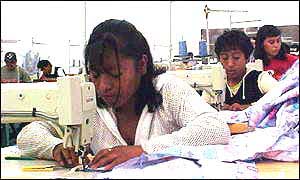 Factories provide valuable jobs but terms are often poor Women working in Mexico face poor working conditions, sexual harassment and no job security, according to rights campaigners. But now the fight is on for better conditions as part of the female workforce demand equality and the new government is considering reforms in Mexico's labour laws. "Discrimination can come in many forms," Labour Minister Francisco Salazar told BBC World Service. "I'm confident that we have the support of enough congressmen and women to get the law through. It's a great step forward for Mexico." Pregnancy tests In recent years women workers have gravitated in large numbers to the rapidly expanding urban areas around Mexico City and to the factories, or "maquilas", set up along Mexico's northern borders. But whilst women seek employment, campaigners argue that they have few statutory rights.
Selma Gomez was one of several hundred women who worked in the cramped conditions at a maquila in the northern desert town of Ciudad Juarez. A single mother of three, she explained how she lost her job two months ago when she became pregnant. "I had worked there for ten years but in the maquilas we have no rights. "The male managers often take on young women and tell them what to wear at work often that will include short skirts. "We have no-one to complain to and when I was sacked because I got pregnant there was nothing I could do." Legislation Female protesters argue that the present labour laws, which have not been updated in 30 years, fail to recognise sexual discrimination. But, as a government official explained to the Everywoman programme, all that might soon change. According to Francisco Salazar, the government of President Vicente Fox is planning to improve women's conditions in the workplace. "We've got agreement on several key issues, a proposal that would for the first time outlaw discrimination on the ground of gender," he assured. Unions Whilst new legislation would be welcomed, there are many women's groups that feel that the law is missing some key issues.
"The talks include trade unions, employers and government officials but all too often the union voice doesn't speak for the female employees. Traditionally many unions have been dominated by men and have remained in the pockets of political parties," she asserted. "That's meant women's interests rarely get a look in." Whilst union representatives and government officials continue to thrash out the new laws, women's groups continue to call for tighter regulation. "More often than not the demands made by the unions don't take into consideration the needs of female workers," Ms Anchint explained. "The whole structure of the unions must be central to any new labour law." | | See also:  09 Jun 98 | Americas 29 Dec 98 | Americas 22 Jul 99 | Americas 09 Sep 99 | Americas 12 Feb 02 | Americas 20 Jul 02 | Country profiles Internet links: The BBC is not responsible for the content of external internet sites Top Americas stories now: Links to more Americas stories are at the foot of the page. | ||||||||||||||||||||||||||||||||||||||||||||||||||||||||||||||||||||||||||||||||||||||||||||||||||||||||||||||||||||||||||||||||||||||||||||||||||||||||||||||||
| |
|  E-mail this story to a friend E-mail this story to a friend |
| |
| Links to more Americas stories |
| | | ||
 | ||||
 | | Back to top
| ||
| ---------------------------------------------------------------------------------- To BBC Sport>> | To BBC Weather>> | To BBC World Service>> ---------------------------------------------------------------------------------- © MMIII | News Sources | Privacy |