|
 |
 | | | | | | |||||||||||||||||||||||||||||||||||||||||||||||||||||||||||||||||||||||||||||||||||||||||||||||||||||||||||||||||||||||||||||||||||||||||||||||||||||||||||||||||||||||||||||||||
| | | You are in: Americas | |||||||||||||||||||||||||||||||||||||||||||||||||||||||||||||||||||||||||||||||||||||||||||||||||||||||||||||||||||||||||||||||||||||||||||||||||||||||||||||||||||||||||||||||||||
|
| | Tuesday, 2 July, 2002, 15:43 GMT 16:43 UK Fossett's balloon challenge Steve Fossett is a seasoned balloonist
The idea of spending two weeks inside a tiny cramped capsule six miles above the ground with outside temperatures well below zero would be many people's idea of hell. But millionaire adventurer Steve Fossett had to contend with all of this while battling storm fronts and sleep deprivation in his attempt to fly around the world alone by balloon. His endurance paid off and on Tuesday Mr Fossett accomplished a feat which has tempted adventurers for centuries when his balloon crossed the line from which he set off a fortnight earlier.
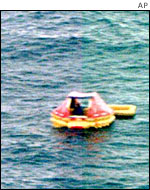
He was beaten to the "'first circumnavigation" title by a two-man team in 1999. Since then, he set his sights on becoming the first person to fly around the world by balloon solo. The Spirit of Freedom's flight was Mr Fossett's sixth try at capturing the solo circumnavigation title. Two of the earlier attempts ended dramatically. In 1998, his balloon plunged 26,250 feet (8,800 metres) into the Coral Sea off Australia's north-east coast. Last year his fifth attempt came to an abrupt end when storms forced him to land in Argentina. His latest flight took him across Australia, the South Pacific ocean, Chile, Argentina, the South Atlantic ocean, South Africa and the Indian Ocean.Although ballooning itself may be centuries old, Mr Fossett's balloon was fitted with state-of-the-art technology. His craft was guided by the satellite-controlled global positioning system (GPS).
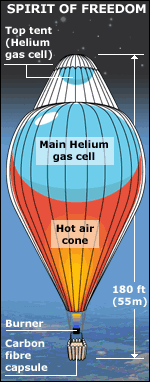
The balloon was also fitted with a range of high-tech radio and satellite communication equipment to maintain contact with the support team. Onboard computers controlled the fuel burners which heated the helium in the balloon's envelope, maintaining height and allowing Mr Fossett to get some sleep. Confined space Despite the modern equipment, Mr Fossett had to cope with arduous living conditions. The cabin - barely 200 cubic feet (5.5 cubic metres) inside - was smaller than a prison cell. Mr Fossett often had to wear a bulky oxygen mask, sleeping a maximum of four hours a day in "catnaps" of no more than 45 minutes. He recently told ground control: "I keep my mask on even when eating, just taking it off to put in the next spoonful."
His food supply consisted of dried, reheatable military-style rations and water. Toilet facilities were at best functional, consisting of a bottle and a bucket. One of the riskiest parts of the flight was changing the fuel cylinders attached to the exterior of the cabin. Mr Fossett had to climb outside the capsule in temperatures well below freezing to switch over the fuel tanks by hand. In case of emergencies, the balloon was fitted with an Emergency Position Indicating Rescue Beacon (EPIRB) which could be activated by the pilot. A risky moment came when Mr Fossett had to use all three burners to maintain height after running into fierce downdrafts about 1,550 miles (2,500 kilometres) east of New Zealand. Mr Fossett also had to act quickly when a burner failed to switch off, causing the balloon to overheat and fly too high. Essential training To prepare for his challenge, Mr Fossett spent several weeks training at high altitudes in Colorado to acclimatise his body. This included running three to five miles (5 km to 8 km) per day at altitudes of more than 12,000 feet (3,650 metres). Such preparation helps the brain to adapt to performing complicated tasks in an environment where oxygen levels are lower than normal.
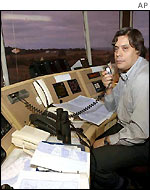
As a balloonist can only control his craft's altitude, charting a course around the world - and its weather systems - is extremely difficult. He has relied on a group of specialist meteorologists to predict altitudes with favourable winds and weather conditions. Other key members of the support staff, based largely at Washington University in St Louis in the US, include balloon engineers and air-traffic control coordinators. 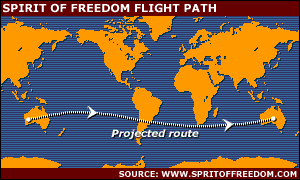 | | See also:  02 Jul 02 | Asia-Pacific 28 Jun 02 | Americas 27 Jun 02 | Americas 24 Jun 02 | Asia-Pacific 23 Jun 02 | Asia-Pacific 21 Jun 02 | Asia-Pacific 20 Jun 02 | Asia-Pacific 10 Oct 01 | England 06 Feb 98 | Balloon race Internet links: The BBC is not responsible for the content of external internet sites Top Americas stories now: Links to more Americas stories are at the foot of the page. | |||||||||||||||||||||||||||||||||||||||||||||||||||||||||||||||||||||||||||||||||||||||||||||||||||||||||||||||||||||||||||||||||||||||||||||||||||||||||||||||||||||||||||||||||
| |
|  E-mail this story to a friend E-mail this story to a friend |
| |
| Links to more Americas stories |
| | | ||
 | ||||
 | | Back to top
| ||
| ---------------------------------------------------------------------------------- To BBC Sport>> | To BBC Weather>> | To BBC World Service>> ---------------------------------------------------------------------------------- © MMIII | News Sources | Privacy |