|
 |
 | | | | | | ||||||||||||||||||||||||||||||||||||||||||||||||||||||||||||||||||||||||||||||||||||||||||||||||||||||||||||||||||||||||||||||||||||||||||||||||||||||||||||||||
| | | You are in: Americas | ||||||||||||||||||||||||||||||||||||||||||||||||||||||||||||||||||||||||||||||||||||||||||||||||||||||||||||||||||||||||||||||||||||||||||||||||||||||||||||||||||
|
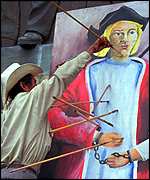
| | Tuesday, 11 June, 2002, 14:37 GMT 15:37 UK DNA may solve Columbus mystery Columbus's remains were moved several times Two Spanish school teachers hope to solve an age-old mystery using DNA technology - where are the remains of Christopher Columbus buried? Two cathedrals claim to house the bones of the great explorer - Seville, in Spain, and Santo Domingo, in the Dominican Republic.
The Andalusian regional government has formally asked church officials in Seville to open their tomb, but it is not clear if they - or their counterparts in Santo Domingo - will give their consent. The two teachers have enlisted the help of Jose Antonio Lorente, director of the Laboratory of Genetic Identification of the University of Granada, to examine the DNA. Mr Lorente usually works on criminal cases but has also helped identify the victims of military regimes in South America. "My heart is jumping out of my chest," said Mr Castro, who studies genealogy in his spare time and has published several papers on historical figures. He says DNA strands from both sets of remains could be compared to those of Hernando Colon, who was Columbus's son through an extramarital affair. His remains are buried at Seville's cathedral, along with the bones that Spain says are his father's. Dominican claim In the Dominican Republic, a cross-shaped monument called the Faro a Colon, or Columbus Lighthouse, also claims to hold Columbus's remains. Luis Yaport, deputy director of the monument, said Dominican President Hipolito Mejia and church officials would make the final decision. "If it really can be proven that these are Columbus's remains, or that they are not, wonderful!" he said. Mr Lorente predicted that Columbus's DNA would be in bad shape after nearly 500 years, but he has previously found a genetic match between bones of a similar age belonging to a Spanish nobleman and his mother.
Columbus died in the city of Valladolid, Spain, in 1506 and was interred in a monastery there. Three years later they were moved to another monastery in Seville and in 1537 moved to the cathedral of Santo Domingo on the island of Hispaniola with the remains of Columbus's son Diego. In 1795 Spain ceded the island to France and ordered Columbus's remains to be removed. A set of remains, believed to be those of Columbus, were dug up from behind the altar and moved first to Havana, Cuba, and eventually to Seville. But in 1877, workers at the Santo Domingo cathedral unearthed a leaden box containing 13 large bone fragments and 28 small ones. The box was inscribed "Illustrious and distinguished male, don Cristobal Colon" - the Spanish name for Columbus. The Dominicans said that the Spanish must have taken the wrong remains in 1795. | | See also:  31 Oct 01 | Americas 14 Oct 98 | Americas 02 Nov 99 | In Depth Internet links: The BBC is not responsible for the content of external internet sites Top Americas stories now: Links to more Americas stories are at the foot of the page. | ||||||||||||||||||||||||||||||||||||||||||||||||||||||||||||||||||||||||||||||||||||||||||||||||||||||||||||||||||||||||||||||||||||||||||||||||||||||||||||||||
| |
|  E-mail this story to a friend E-mail this story to a friend |
| |
| Links to more Americas stories |
| | | ||
 | ||||
 | | Back to top
| ||
| ---------------------------------------------------------------------------------- To BBC Sport>> | To BBC Weather>> | To BBC World Service>> ---------------------------------------------------------------------------------- © MMIII | News Sources | Privacy |