|
 |
 | | | | | | ||||||||||||||||||||||||||||||||||||||||||||||||||||||||||||||||||||||||||||||||||||||||||||||||||||||||||||||||||||||||||||||||||||||||||||||||||||||||||||||||||||||||||||||||||||||||||||||||
| | | You are in: Africa | ||||||||||||||||||||||||||||||||||||||||||||||||||||||||||||||||||||||||||||||||||||||||||||||||||||||||||||||||||||||||||||||||||||||||||||||||||||||||||||||||||||||||||||||||||||||||||||||||||
|
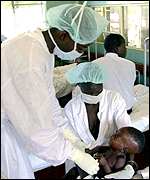
| | Wednesday, 5 February, 2003, 15:29 GMT Ebola outbreak feared in Congo  Ebola is highly contagious and deadly
The Congolese authorities say they are extremely concerned that the virus might spread.
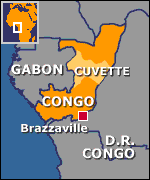
The Congolese Ministry of Health says 16 people are known to have died so far, but communications with the villages of Kele and Mbou, 800 kilometres north of Brazzaville in the Region of Cuvette West, are difficult. Doctor Joseph Mboussa, Director in the Ministry of Health, says a villager has been dying every few days since the outbreak began on 4 January, and already the death toll could be much higher than 16. Gorillas wiped out The authorities were first alerted to a possible outbreak when a clan of gorillas in the Cuvette West Region began to die. Tests carried out on the bodies confirmed that the gorillas had died from the Ebola virus, and the disease has now claimed more than 80% of the gorilla clan.
The Ebola virus is easily spread just by skin contact with an infected primate or person. Doctor Mboussa says this makes the virus particularly difficult to contain, as Congolese funeral rites dictate that the body of a deceased person be washed by the family before burial. The current outbreak is believed to have been caused by villagers eating primates which were already infected with Ebola. Staple food An emergency team of health ministry workers was scheduled to leave for the region on Wednesday to investigate the outbreak and try to contain it, following delays caused by a shortage of petrol and funds for the trip. Ebola experts working for the World Health Organisation in Libreville and Geneva also expect to leave soon to investigate the outbreak. Some years ago in the neighbouring Democratic Republic of Congo, then President Mobutu Sese Seko adopted a controversial policy of putting an infected village in quarantine. The Ebola virus was contained but the entire village was wiped out. The Congolese health ministry has so far asked local inhabitants not to travel, but the authorities are hopeful they will not have to resort to such drastic measures. The forestry ministry already has several teams in place trying to make locals aware of the dangers of eating primates, but they admit it is a losing battle in a region where bush meat has formed a staple part of people's diets for centuries. | |
See also:  18 Dec 02 | Health 04 Mar 02 | Health 16 Jan 02 | Africa 11 Jan 02 | Africa 27 Feb 01 | Africa 08 Feb 03 | Medical notes 18 Oct 00 | Health Internet links: The BBC is not responsible for the content of external internet sites Top Africa stories now: Links to more Africa stories are at the foot of the page. | ||||||||||||||||||||||||||||||||||||||||||||||||||||||||||||||||||||||||||||||||||||||||||||||||||||||||||||||||||||||||||||||||||||||||||||||||||||||||||||||||||||||||||||||||||||||||||||||||
 | |
|  E-mail this story to a friend E-mail this story to a friend |
| |
| Links to more Africa stories |
| | | ||
 | ||||
 | | Back to top
| ||
| ---------------------------------------------------------------------------------- To BBC Sport>> | To BBC Weather>> | To BBC World Service>> ---------------------------------------------------------------------------------- © MMIII | News Sources | Privacy |