|
 |
 | | | | | | ||||||||||||||||||||||||||||||||||||||||||||||||||||||||||||||||||||||||||||||||||||||||||||||||||||||||||||||||||||||||||||||||||||||||||||||||||||||||||||||||||||||||||
| | | You are in: Africa | ||||||||||||||||||||||||||||||||||||||||||||||||||||||||||||||||||||||||||||||||||||||||||||||||||||||||||||||||||||||||||||||||||||||||||||||||||||||||||||||||||||||||||||
|
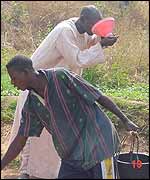
| | Tuesday, 21 January, 2003, 13:33 GMT Brisk business for Nigeria's water hawkers  For many young men water hawking is their only job
As unseasonable hot weather grips residents of Nigeria's capital city Abuja, young men with push carts are selling water and doing brisk business.
The pipes are there but no water comes gushing out when you open them. This is mostly the case all year round but it gets worse in the dry season, when residents cannot get nature's assistance via rainwater. Population problem Abuja became the capital of Nigeria in 1991, but while the city's planners were thinking of 250,000 people, Minister for Water Resources Alhaji Mukhtari Shagari believes that the population is now more than one million and rising by the day.
This, he says, has stretched the city's resources, thereby leading to problems such as those of water shortages. For Mr Shagari, the problem will persist until a huge new dam in the neighbouring Kaduna state is completed sometime next year, but he says the problem should not be exaggerated. "I really don't see anything I should call scandalous," he says. "Every city in the world has similar problem, especially when you look at Abuja which is a new city and people are flocking into the city almost on a daily basis. "I believe this is a temporary problem and we are spending over 40bn naira [$310m] to make sure that Abuja's water problem is solved." Water deficit At present, depending on their income, some residents sink a bore hole or rely on water tankers to fill up their reservoirs for domestic and other uses.
But most of the city's residents still rely on the young men who are using push carts to hawk water in brightly coloured jerry cans. One of the top politicians who resides within shouting distance of the presidential villa in the highbrow Asokoro district of Abuja told me that he also relies on water tankers to fill up his reservoirs twice a week. Water tankers are also used to ferry water from elsewhere to sprinkle on the outer gardens of the presidential villa itself. Some residents of one of the central districts, Wuse Two, told BBC News Online that there had been no pipe-borne water in their area for the last two years. Dubious hygiene An angry resident, Alhaji Ibrahim Baba Jimeta, said all their complaints to the municipal water authorities had not brought any relief. "It is either sabotage or a deliberate policy to expose us to water-borne disease," he said. "We cannot attest to the hygiene of the water we buy from the hawkers. "It is unbecoming of a federal capital city," he adds. For Mr Jimeta and others, whose taps have not seen any water for so long, they now rely on water hawkers, a common sight on most of Abuja's streets. In some cases these young men go to the nearest place where pipe-borne water still runs and fill up their jerry cans for sale to residents in the not-so-lucky areas. Wells Aisha Idris, who runs a small restaurant in Wuse Two, said that she spends 480 naira ($3.70) every day to buy 20 jerry cans from the water hawkers.
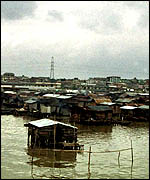
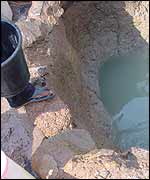
But for those who live in the shanty towns which have grown outside the city centre, they get most their water supply from wells and streams of doubtful hygiene. When I visited one of the wells dug under a culvert on the road which leads to Abuja airport, there was an orderly queue of young men waiting for their turns to fetch water from the well for sale to the nearby settlement of Kuchigoro. It is from sources like this that tens of thousands of Abuja's residents are getting their water for drinking and other domestic uses. Continued patronage For the young men - for whom hawking water is their only employment - the water they sell is safe as they have had no complaints from their customers. In between filling his 10 jerry cans, Muhammadu Kabiru told me that they have been allowed to continue with their trade at the edge of the highway unmolested by the municipal authorities because of the services they render. Meanwhile Nigeria's high and mighty, heralded by wailing sirens, rush past while Kabiru and his colleagues continue their routine at the well and take their chance to cross the highway, pushing their water-laden carts to their customers. And while the authorities try to find a permanent solution to Abuja's water problem, the city's water hawkers seem assured of continued patronage from its thirsty residents. | | See also:  11 Jun 02 | Africa 14 Jan 02 | Science/Nature 30 Nov 01 | Africa 28 Nov 01 | Africa 30 Aug 01 | Africa Internet links: The BBC is not responsible for the content of external internet sites Top Africa stories now: Links to more Africa stories are at the foot of the page. | ||||||||||||||||||||||||||||||||||||||||||||||||||||||||||||||||||||||||||||||||||||||||||||||||||||||||||||||||||||||||||||||||||||||||||||||||||||||||||||||||||||||||||
 | |
|  E-mail this story to a friend E-mail this story to a friend |
| |
| Links to more Africa stories |
| | | ||
 | ||||
 | | Back to top
| ||
| ---------------------------------------------------------------------------------- To BBC Sport>> | To BBC Weather>> | To BBC World Service>> ---------------------------------------------------------------------------------- © MMIII | News Sources | Privacy |






 We cannot attest to the hygiene of the water we buy from the hawkers... It is unbecoming of a federal capital city