|
 |
 | | | | | | |||||||||||||||||||||||||||||||||||||||||||||||||||||||||||||||||||||||||||||||||||||||||||||||||||||||||||||||||||||||||||||||||||||||||||||||||||||||||||||||||||||||||
| | | You are in: Africa | |||||||||||||||||||||||||||||||||||||||||||||||||||||||||||||||||||||||||||||||||||||||||||||||||||||||||||||||||||||||||||||||||||||||||||||||||||||||||||||||||||||||||||
|
| | Thursday, 14 November, 2002, 18:47 GMT Uganda stock exchange expands 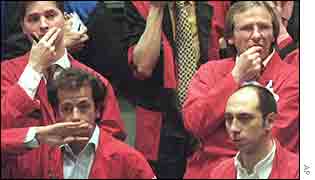 Traders in Uganda wear red too, but are less tense
As the bell struck on Thursday morning trading began at the Uganda Securities Exchange - basically a small office in central Kampala. This time there is an extra company listed - Bank of Baroda Uganda. It means more work for the half a dozen brokers in their bright red jackets buying and selling shares on behalf of the investors.
Trading takes place two mornings a week. And no, this is not the hive of activity you will find in other markets in capital cities around the world. At the end of 20 minutes of trading, nine deals had been made and over 86,000 shares traded. And on the first day on the exchange the new Bank of Baroda shares had risen in value by 16%. Good news for those who had bought shares in the bank. The Ugandan Stock Exchange in Kampala was set up two years ago and the signing of the Bank of Baroda takes the total number of companies listed to just five, making it one of the smallest in Africa. Openness But there are two challenges. Firstly investing in shares does not even cross the minds of most people struggling to make a living in Uganda, so the government has to encourage investors. Another challenge is convincing more firms to register on the stock exchange.
This may partly be due to the fact that once on the stock market a firm is subjected to more scrutiny so any firm with something to hide will be put off. The regulatory body ensuring that everything is above board at the exchange is the Capital Markets Authority. "The big issue and the challenge you have is convincing companies that full disclosure is to your advantage. If you have nothing to hide, why not disclose?" says chief executive Japheth Katto. "All we're asking is: can you disclose the material facts?" he asks. Considering Uganda has in recent years had an unwelcome number of banks collapsing the start of trading in Bank of Baroda shares on Thursday was viewed as a positive step for the financial industry. And while it may still be small, the Ugandan Securities Exchange is optimistic about the future. "When you look at the stock exchanges which have been around for 300 years, this is exactly the way they started... As the economy grows, we'll have more public issues... There's hope," says chief executive Simon Rutega. | | See also:  12 Jul 02 | Country profiles 12 Jul 02 | Country profiles Internet links: The BBC is not responsible for the content of external internet sites Top Africa stories now: Links to more Africa stories are at the foot of the page. | |||||||||||||||||||||||||||||||||||||||||||||||||||||||||||||||||||||||||||||||||||||||||||||||||||||||||||||||||||||||||||||||||||||||||||||||||||||||||||||||||||||||||
| |
|  E-mail this story to a friend E-mail this story to a friend |
| |
| Links to more Africa stories |
| | | ||
 | ||||
 | | Back to top
| ||
| ---------------------------------------------------------------------------------- To BBC Sport>> | To BBC Weather>> | To BBC World Service>> ---------------------------------------------------------------------------------- © MMIII | News Sources | Privacy |