|
 |
 | | | | | | |||||||||||||||||||||||||||||||||||||||||||||||||||||||||||||||||||||||||||||||||||||||||||||||||||||||||||||||||||||||||||||||||||||||||||||||||||||||||||||||||||||||
| | | You are in: Africa | |||||||||||||||||||||||||||||||||||||||||||||||||||||||||||||||||||||||||||||||||||||||||||||||||||||||||||||||||||||||||||||||||||||||||||||||||||||||||||||||||||||||||
|
| | Thursday, 14 November, 2002, 12:09 GMT Ivory Coast rebels reject peace plan 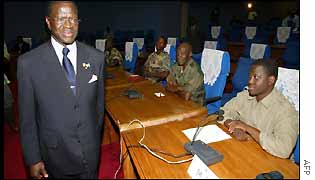 The two sides cannot agree on political issues Ivory Coast rebel negotiators have rejected a draft peace plan aimed at ending their eight-week conflict with the government. Togolese President Gnassingbe Eyadema, who is mediating the talks, drew up new proposals after meeting both sides earlier this week in the Togolese capital, Lome.
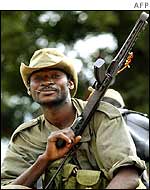
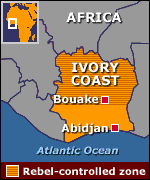
Ivory Coast has been split in two since 19 September, with the MPCI in control of the north and the south still under the authority of President Laurent Gbagbo. The rebels accuse Mr Gbagbo of discriminating against northern Muslims and demand his resignation and fresh elections. The president denies the allegations and insists that he was democratically elected, so he refuses to step down. He demands that the rebels must disarm. Curfew extended On Wednesday, the Ivorian Government extended the nightly curfew in the commercial capital, Abidjan, saying violent incidents in the city had increased since the start of the peace talks in Togo. Ivorian Defence Minister Bertin Kadet said people are being executed in cold blood by armed mobs and others are under threat of kidnap.
State television said the curfew would now start two hours earlier, at 1900 (local time and GMT). The extension of the curfew coincides with a ban on the wearing of camouflage clothes by civilians. Extortion "This proposal has been drafted by the government, it is clear that we cannot accept it as it stands," rebel negotiator Louis Dakoury-Tabley said. "It calls on us to lay down our arms unconditionally. If we accept this we will find ourselves taken prisoner." His brother, Benoit, was killed last week in Abidjan, two days after he announced that he was leaving the ruling party to join the rebels. This killing prompted the rebels to withdraw from the peace talks on Sunday.
Meanwhile, the United States has accused the government of Ivory Coast and the rebels of carrying out widespread human rights abuses. A State Department spokesman, Richard Boucher, said the Bush administration had intelligence relating to extra-judicial killings, harassment and extortion of citizens by both sides. Hundreds of people have been killed and many thousands have fled their homes since the rebellion started. Foreigners and those seen as opposition sympathisers have been attacked in government-held areas. A BBC correspondent in Ivory Coast says even while attending the talks in Lome, both sides have been preparing for a possible outbreak of fighting. A West African peacekeeping force is due to replace French troops which have deployed in a buffer zone between the opposing sides. | |
See also:  11 Nov 02 | Africa 10 Nov 02 | Africa 08 Nov 02 | Africa 07 Nov 02 | Africa 06 Nov 02 | Africa 02 Nov 02 | Africa Internet links: The BBC is not responsible for the content of external internet sites Top Africa stories now: Links to more Africa stories are at the foot of the page. | |||||||||||||||||||||||||||||||||||||||||||||||||||||||||||||||||||||||||||||||||||||||||||||||||||||||||||||||||||||||||||||||||||||||||||||||||||||||||||||||||||||||
| |
|  E-mail this story to a friend E-mail this story to a friend |
| |
| Links to more Africa stories |
| | | ||
 | ||||
 | | Back to top
| ||
| ---------------------------------------------------------------------------------- To BBC Sport>> | To BBC Weather>> | To BBC World Service>> ---------------------------------------------------------------------------------- © MMIII | News Sources | Privacy |