
|
 |
 | | | | | | ||||||||||||||||||||||||||||||||||||||||||||||||||||||||||||||||||||||||||||||||||||||||||||||||||||||||||||||||||||||||||||||||||||||||||||||||||||||||||||||
| | | You are in: Africa | ||||||||||||||||||||||||||||||||||||||||||||||||||||||||||||||||||||||||||||||||||||||||||||||||||||||||||||||||||||||||||||||||||||||||||||||||||||||||||||||||
|
| | Wednesday, 13 November, 2002, 16:37 GMT Bleak outlook for global education 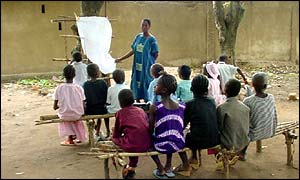 Most of the countries at risk are in Africa A new United Nations report has painted a grim picture of education in many countries, saying much more sustained investment is needed to help millions of children. The report by the UN educational organisation (Unesco) published on Wednesday says 57 countries are unlikely to meet internationally agreed targets for providing adequate education for all children by the year 2015. "Some Central and East European nations have even been moving backwards," the report says. Most of the countries listed are in Africa - countries plagued by conflicts and the cost of fighting HIV/Aids. Click here for list of countries at risk of not achieving universal primary education by 2015 But middle-income countries like Yugoslavia, Venezuela and Mauritius are also included as risking failure, alongside China, which has prided itself on its social provision.
Even relatively rich Saudi Arabia may not reach the target. The report says an extra $5.6bn will be needed annually to achieve the universal primary education and gender parity goals set by the World Education Forum in Dakar, Senegal, in 2000. According to Professor Chris Colclough of Unesco there is a "crisis" in education provision worldwide. "Urgent action is needed, but it's action that needs to be sustained over a long period." The report says total bilateral aid to education - which accounts for 70% of all such financial support - fell by 16% between 1990 and 2001. Some 35 million extra teachers are needed throughout the world - three million for sub-Saharan Africa alone, the report says. The report says 28 countries - accounting for 26% of the world's population - might not meet any of the three measurable goals set at the Dakar forum: universal primary education, gender equality and the halving of illiteracy rates. A total of 78 countries - including Bangladesh, China, India and Pakistan - will not be able to halve their rate of illiteracy by 2015 unless a much greater effort is made, Unesco says. The report says 83 countries are on track to deliver by 2015 the Education For All target set in Dakar. Bahrain, Barbados, Benin, Bhutan, Botswana, Burkina Faso, Burundi, Central African Republic, Chad, China, Comoros, Croatia, Cyprus, Democratic Republic of Congo, Djibouti, Equatorial Guinea, Eritrea, Ethiopia, Gabon, Gambia, Georgia, Guyana, Haiti, Indonesia, Iran, Ivory Coast, Jamaica, Kiribati, Kuwait, Kyrgyzstan, Lebanon, Lesotho, Madagascar, Malawi, Mali, Mauritania, Mauritius, Morocco, Mozambique, Namibia, Nicaragua, Niger, Nigeria, Oman, Paraguay, Saudi Arabia, St Kitts and Nevis, St Vincent and the Grenadines, Syria, Macedonia, Turkey, United Arab Emirates, Tanzania, Uzbekistan, Venezuela, Yugoslavia, Zambia Click here to return | | See also:  21 Apr 02 | Business 24 Jul 02 | Africa 01 Apr 02 | Education 22 Jan 02 | Africa 03 Apr 00 | Education 26 Feb 01 | Education Internet links: The BBC is not responsible for the content of external internet sites Top Africa stories now: Links to more Africa stories are at the foot of the page. | ||||||||||||||||||||||||||||||||||||||||||||||||||||||||||||||||||||||||||||||||||||||||||||||||||||||||||||||||||||||||||||||||||||||||||||||||||||||||||||||
| |
|  E-mail this story to a friend E-mail this story to a friend |
| |
| Links to more Africa stories |
| | | ||
 | ||||
 | | Back to top
| ||
| ---------------------------------------------------------------------------------- To BBC Sport>> | To BBC Weather>> | To BBC World Service>> ---------------------------------------------------------------------------------- © MMIII | News Sources | Privacy |





