|
 |
 | | | | | | ||||||||||||||||||||||||||||||||||||||||||||||||||||||||||||||||||||||||||||||||||||||||||||||||||||||||||||||||||||||||||||||||||||||||||||||||||||||||||||||||||||||||||||||||||||||||||||||||||||||||||
| | | You are in: Africa | ||||||||||||||||||||||||||||||||||||||||||||||||||||||||||||||||||||||||||||||||||||||||||||||||||||||||||||||||||||||||||||||||||||||||||||||||||||||||||||||||||||||||||||||||||||||||||||||||||||||||||||
|
| | Thursday, 31 October, 2002, 15:51 GMT Crash courses for Kenya's drivers 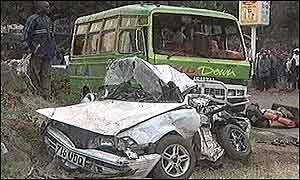 Matatus are often blamed for crashes in Kenya
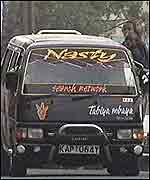
David Kimari screeches round a corner, narrowly avoiding an oncoming bus and then thumping into a giant pothole before swinging over to the side of the road to squeeze more passengers into the back of his rusting, graffiti-covered minibus.
David is a matatu driver - which means he is probably one of the most dangerous drivers in the world. Every year some 3,000 people are killed on Kenya's roads - making them 20 times more dangerous that Britain's. Matatus - the main form of public transport in the country - are blamed for many, if not most, of the crashes. Crash courses "They are unsafe and the drivers are reckless," says passenger Musyoka Makau - crushed uncomfortably into the back of a Nissan minibus named "Death Warrant."
"It's a lack of responsibility," says Makau. But now the drivers are being forced back to school in a new campaign to try to cut down on the daily road carnage. Special one day courses are being held for all of Kenya's estimated 16,000 matatu drivers. "What is the brake for?" instructor Daniel Muchai asks a classroom full of young men. Silence... Then a cautious volunteer suggests - "to slow the vehicle?" "We're trying to teach them the need to be responsible," explains Dickson Mbugua, who owns two matatus, and is also chairman of the Matatu Welfare Association. "The course teaches them first aid too - and explains about the effects of driving when taking drink or drugs. We hope it will cut down the number of deaths on the roads." Driven by money A television campaign, funded by the British government, is also teaching passengers how to avoid unnecessary risks. It features such unflinching advice as: "Complain loudly if you feel the driver is reckless... it is better to die fighting than to be a lame duck waiting to be slaughtered!"
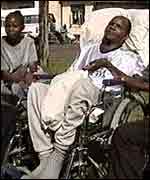
"The tyres burst, and the vehicle flipped over and over," he remembers. "As for the drivers - they'll not mind about us passengers. All they want is money." It's a fair point. Faced with rising insurance costs, increased competition and mafia-style protection rackets on certain routes, the matatu business is under huge financial pressure. That is inevitably transferred to the drivers, who must pick up more passengers and drive ever faster. There are plans to put uniforms on the drivers, and their touts - one or two young men who normally hang precariously off the side of the vehicle trying to beckon passengers on board - and to get rid of the graffiti. | |
See also:  22 Oct 01 | Africa 19 Mar 01 | Africa 01 Mar 01 | Africa Internet links: The BBC is not responsible for the content of external internet sites Top Africa stories now: Links to more Africa stories are at the foot of the page. | ||||||||||||||||||||||||||||||||||||||||||||||||||||||||||||||||||||||||||||||||||||||||||||||||||||||||||||||||||||||||||||||||||||||||||||||||||||||||||||||||||||||||||||||||||||||||||||||||||||||||||
| |
|  E-mail this story to a friend E-mail this story to a friend |
| |
| Links to more Africa stories |
| | | ||
 | ||||
 | | Back to top
| ||
| ---------------------------------------------------------------------------------- To BBC Sport>> | To BBC Weather>> | To BBC World Service>> ---------------------------------------------------------------------------------- © MMIII | News Sources | Privacy |