|
 |
 | | | | | | |||||||||||||||||||||||||||||||||||||||||||||||||||||||||||||||||||||||||||||||||||||||||||||||||||||||||||||||||||||||||||||||||||||||||||||||||||||||||||||||||||||||||||||||||||||||||||||||||||||
| | | You are in: Africa | |||||||||||||||||||||||||||||||||||||||||||||||||||||||||||||||||||||||||||||||||||||||||||||||||||||||||||||||||||||||||||||||||||||||||||||||||||||||||||||||||||||||||||||||||||||||||||||||||||||||
|
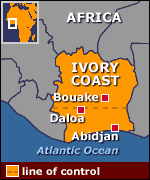
| | Friday, 25 October, 2002, 16:54 GMT 17:54 UK Plans made for Ivory Coast force 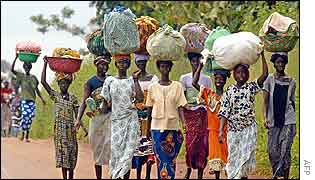 Foreigners and Muslims have fled government-held areas West African military chiefs have been meeting in Ivory Coast's main city, Abidjan, to discuss deploying peacekeepers. The force, which should be deployed within two weeks, is intended to replace French troops who have been keeping government soldiers and rebels apart since a ceasefire was agreed last week. The officers were studying a report from an international reconnaissance team, which has spent the past two days assessing the positions of both sides. Their recommendations will then be considered by West African foreign ministers meeting on Saturday.
West African leaders are keen to end the five-week crisis which has left the country divided in two and is threatening turmoil across the region They have repeatedly urged both sides to hold talks. Regional officials say they expect the West African force to be made up of three battalions, incorporating more than 2,000 troops. Attacks Several neighbouring countries and France, the former colonial power, have urged the Ivory Coast Government to stop attacks on foreigners, accused by some of supporting rebels.
Burkina Faso says that the peacekeepers should have the job of protecting foreigners, and has warned of the potential of genocide. The uprising has increased long-standing tensions between the mainly Muslim north, controlled by the rebels, and the Christian south, which backs President Laurent Gbagbo. The three million West African ex-patriates living in Ivory Coast are mostly Muslims, associated by Mr Gbagbo's supporters with the rebellion and opposition leader Alassane Ouattara. Ivory Coast is the richest country in West Africa and for many years, nationals of neighbouring countries were encouraged to go there to work on cocoa farms. Many Burkinabes and Malians have been attacked or had their houses burnt down in Abidjan and other government-held areas. Each side in the five-week uprising has accused the other of committing atrocities. France says Mr Ouattara could soon leave the home of the French ambassador in Abidjan. Mr Ouattara, a former prime minister, took refuge there when his own home was burnt down at the start of the uprising. President Gbago suggested on Thursday that Mr Ouattara might leave Ivory Coast, as he was harming relations with France. But when asked if Mr Ouattara might come to France, a French spokesman said the question was premature. | |
See also:  24 Oct 02 | Africa 23 Oct 02 | Africa 21 Oct 02 | Africa 18 Oct 02 | Africa 17 Oct 02 | Africa 16 Oct 02 | Africa 16 Oct 02 | Africa Internet links: The BBC is not responsible for the content of external internet sites Top Africa stories now: Links to more Africa stories are at the foot of the page. | |||||||||||||||||||||||||||||||||||||||||||||||||||||||||||||||||||||||||||||||||||||||||||||||||||||||||||||||||||||||||||||||||||||||||||||||||||||||||||||||||||||||||||||||||||||||||||||||||||||
| |
|  E-mail this story to a friend E-mail this story to a friend |
| |
| Links to more Africa stories |
| | | ||
 | ||||
 | | Back to top
| ||
| ---------------------------------------------------------------------------------- To BBC Sport>> | To BBC Weather>> | To BBC World Service>> ---------------------------------------------------------------------------------- © MMIII | News Sources | Privacy |