|
 |
 | | | | | | ||||||||||||||||||||||||||||||||||||||||||||||||||||||||||||||||||||||||||||||||||||||||||||||||||||||||||||||||||||||||||||||||||||||||||||||||||||||||||||||||||||||||||||||||||||||||||||||||||||||||||||||||||||||||
| | | You are in: Africa | ||||||||||||||||||||||||||||||||||||||||||||||||||||||||||||||||||||||||||||||||||||||||||||||||||||||||||||||||||||||||||||||||||||||||||||||||||||||||||||||||||||||||||||||||||||||||||||||||||||||||||||||||||||||||||
|
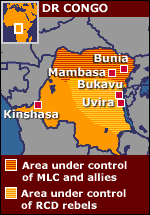
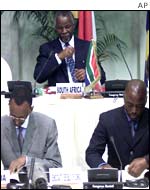
| | Sunday, 20 October, 2002, 07:01 GMT 08:01 UK Congo talks 'to resume' 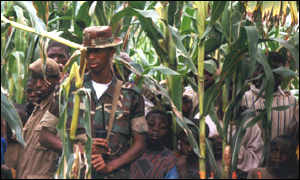 Fighting has been continuing in eastern Congo Talks between the government of the Democratic Republic of Congo and rebel groups will resume on 25 October in South Africa, the United Nations special envoy, Moustapha Niasse, has said. The talks are aimed at forming a coalition government ahead of what are intended to be the first free elections since the country became independent in 1960. Earlier, one of the main rebel groups - the Rwandan-backed Congolese Rally for Democracy (RCD) - said it was ready to resume talks now that its forces were back in control of the eastern port town of Uvira.
Mr Niasse, a former Senegalese prime minister, told the French news agency AFP that he hoped representatives of civil society and the political opposition would also take part in the talks. "The three warring parties - the government in Kinshasa and the two rebel groups, the Movement for the Liberation of Congo (MLC) and the Congolese Rally for Democracy - will discuss the contents of provisions of the comprehensive and inclusive agreement," he said. The talks planned for Pretoria will follow on from similar meetings in Sun City, South Africa, in March and April. RCD Secretary General Azarias Ruberwa warned that if the Kinshasa government "did not change its attitude", the rebel group would re-negotiate some points that had already been decided. One of these is the principle that President Joseph Kabila should continue as head of state during the transition to democratic elections. A peace agreement signed earlier this year - which the RCD accuses the Kinshasa government of breaking in the past week - provided for Mr Kabila to remain in power during a transitional period. Town recaptured The RCD says it captured more than 50 fighters when it retook Uvira, and they included government soldiers as well as Burundian and Rwandan Hutu rebels. Although last week, UN peacekeepers (Monuc) said there were no Hutu Interahamwe forces in Uvira Many of the Hutu rebels have been implicated in the 1994 Rwandan genocide in which an estimated 800,000 people - mainly minority Tutsis - were massacred. The RCD estimates that about 100 civilians and fighters were killed in the Uvira operation.
Rwanda has warned it is ready to send its troops back into eastern DRC to defend its border. It has also accused the UN Security Council of a "conspiracy of silence" for failing to put the blame for renewed fighting on the Kabila government. The council has warned that the renewed violence could destabilise the region and threaten neighbouring Rwanda and Burundi. The UN food agency is also warning of a humanitarian catastrophe in the area. The war in the DRC began in 1998 when Uganda and Rwanda backed separate rebel armies both trying to topple the Kinshasa government. The government has been propped up by Zimbabwe, Angola and Namibia. It is estimated that more than two million people have died, most from starvation and hunger. | |
Internet links:  The BBC is not responsible for the content of external internet sites Top Africa stories now: Links to more Africa stories are at the foot of the page. | ||||||||||||||||||||||||||||||||||||||||||||||||||||||||||||||||||||||||||||||||||||||||||||||||||||||||||||||||||||||||||||||||||||||||||||||||||||||||||||||||||||||||||||||||||||||||||||||||||||||||||||||||||||||||
| |
|  E-mail this story to a friend E-mail this story to a friend |
| |
| Links to more Africa stories |
| | | ||
 | ||||
 | | Back to top
| ||
| ---------------------------------------------------------------------------------- To BBC Sport>> | To BBC Weather>> | To BBC World Service>> ---------------------------------------------------------------------------------- © MMIII | News Sources | Privacy |