|
 |
 | | | | | | ||||||||||||||||||||||||||||||||||||||||||||||||||||||||||||||||||||||||||||||||||||||||||||||||||||||||||||||||||||||||||||||||||||||||||||||||||||||||||||||||||||||||||||||||||||
| | | You are in: Africa | ||||||||||||||||||||||||||||||||||||||||||||||||||||||||||||||||||||||||||||||||||||||||||||||||||||||||||||||||||||||||||||||||||||||||||||||||||||||||||||||||||||||||||||||||||||||
|
| | Tuesday, 8 October, 2002, 13:01 GMT 14:01 UK Can tragedy change Senegal? 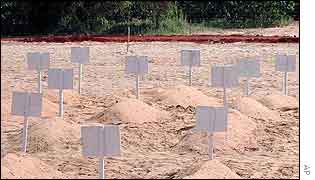 Many corpses have not been found
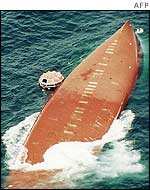
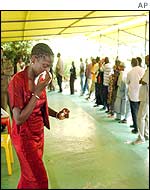
Former BBC Dakar correspondent Joseph Winter was in Senegal when the Joola ferry sank, with the loss of 1,000 lives and considers its effects. The whole of Senegal was profoundly shocked by the recent ferry disaster, which claimed around 1,000 lives, many of them schoolchildren and students. President Abdoulaye Wade has urged the entire population to change their behaviour and attitudes but this will not be easy.
First, the boat was designed to hold either 550 or 800 people, depending on different versions but over 1,000 were on board. Second, although the ship capsized at 2330 local time, rescue efforts were not mobilised until 0800 the next morning. The people who were supposed to be on duty overnight at Dakar's port and the Air-Sea Rescue service were nowhere to be seen. Hard change One survivor who clung onto a piece of wood for nine hours said that even if help had arrived two hours earlier, the four other people who had shared the wood with him would also have been rescued. If rescue efforts had begun at midnight when the absence of a routine log-in call from the Joola's captain should have sounded alarms, hundreds of lives might have been saved.
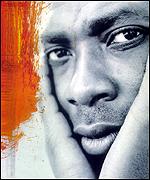
Mr Wade has said that those responsible will be severely dealt with but he has admitted that such laxness is all too common and must now be changed. "We all have to look deeply at ourselves because the vices at the heart of this catastrophe are based in our relaxed attitudes, our lack of rigour, irresponsibility and even greed when we tolerate situations which we know are dangerous simply because we can profit from them." The president was elected on a platform of "change" in 2000 but changing the behaviour of an entire nation will take some doing. Catching civil servants at their desks in Dakar can seem like an impossible task. The week-end often incorporates both Monday and Friday, while lunch breaks frequently last until the office closes. Of course, most people do not hold the lives of 1,000 people in their hands but if everyone treats actually turning up for work as an optional extra, the chances are that those in key posts will follow suit. Connections Music superstar Youssou Ndour has set an example by closing his Thiossane nightclub until it is visited by safety inspectors, who should also specify how many people can safely dance under its flashing lights. Police have cracked down on overloading in Dakar's notoriously unsafe "car rapides" (minibus taxis) but will this last or will a few bribes soon mean a return to business as normal?
But friends and relatives are the key to getting anything done in Senegal. If you know the right people, you can do whatever you want, if not, be prepared to wait an eternity or pay a bribe. I was reminded of this before I had even left the airport - two weeks before the Joola sank. I happened to meet an old friend working there, who got his colleagues on the customs desk to wave me through without the usual hassles and requests for cash. This was most welcome at the time but looking back, drug smugglers, arms dealers and money launderers presumably use such connections to avoid detection. Unofficial methods As a relative newcomer to the presidency, Mr Wade has more freedom to usher in change than members of the "ancien regime". The resignation of two cabinet ministers and the harsh tone of his speech - especially his criticism of the army which ran the Joola - would have been unthinkable if the disaster had occurred under the Socialist Party administration which ruled Senegal for 40 years.
But while some people may be wary of using their acquaintances to avoid paying for ferry tickets, this is likely to be more due to fear of being caught up in another tragedy than out of a new desire to obey the rules. If Mr Wade is serious about changing Senegal, he must first ensure that civil servants, over whom he has more control, both obey and enforce the regulations. If this happens, there will be less need for Senegalese to resort to their unofficial methods of getting things done. Otherwise, his fine soul-searching speech to the nation will have been just rhetoric and many nightclubs, buildings, aeroplanes and taxis, not to mention the new ferries he has promised, will be disasters waiting to happen. | |
See also:  02 Oct 02 | Africa 02 Oct 02 | Africa 20 Mar 00 | Africa Internet links: The BBC is not responsible for the content of external internet sites Top Africa stories now: Links to more Africa stories are at the foot of the page. | ||||||||||||||||||||||||||||||||||||||||||||||||||||||||||||||||||||||||||||||||||||||||||||||||||||||||||||||||||||||||||||||||||||||||||||||||||||||||||||||||||||||||||||||||||||
| |
|  E-mail this story to a friend E-mail this story to a friend |
| |
| Links to more Africa stories |
| | | ||
 | ||||
 | | Back to top
| ||
| ---------------------------------------------------------------------------------- To BBC Sport>> | To BBC Weather>> | To BBC World Service>> ---------------------------------------------------------------------------------- © MMIII | News Sources | Privacy |