|
 |
 | | | | | | ||||||||||||||||||||||||||||||||||||||||||||||||||||||||||||||||||||||||||||||||||||||||||||||||||||||||||||||||||||||||||||||||||||||||||||||||||||||||||||||||||||||||||||||||||||||||||||||||||
| | | You are in: Africa | ||||||||||||||||||||||||||||||||||||||||||||||||||||||||||||||||||||||||||||||||||||||||||||||||||||||||||||||||||||||||||||||||||||||||||||||||||||||||||||||||||||||||||||||||||||||||||||||||||||
|
| | Sunday, 29 September, 2002, 06:31 GMT 07:31 UK Senegal takes blame for ferry tragedy 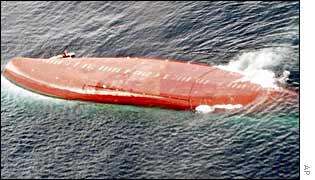 Hundreds died when the ferry overturned The Senegalese authorities are facing fierce public anger after accepting responsibility for a ferry disaster in which hundreds of people died. Rescuers have recovered the bodies of 300 people and about 100 survivors have been picked up, from almost 800 passengers on board the vessel.
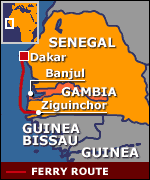
There is little hope of finding more survivors, rescue workers say. Senegalese President Abdoulaye Wade has said the state bears responsibility for Thursday night's accident. Facing angry crowds in the capital, Dakar, he said he believed there had been "an accumulation of errors," which resulted in the state-run ferry capsizing. Overloaded ship Mr Wade said it had been established that the ship was overloaded - and the state would compensate the victims' families. The ferry, named the Joola, was travelling from Ziguinchor, the main town of the southern Senegalese province of Casamance, to Dakar when the tragedy occurred.
It was carrying 796 passengers, although it had a capacity of just 550. Mr Wade said, people had been allowed on without tickets. "(The boat) was too high in the water, too slow." Questions have also been raised about maintenance, as the Joola had only recently resumed service after undergoing repairs. Jean-Marie Diatta, anxiously waiting for news of his relatives at the quayside, told the BBC he blamed the tragedy on negligence. He said an earlier sailing from Ziguinchor had also experienced problems, with one of the ship's motors damaged in a storm. "When that damage became clear, the ship should have been put out of commission," said Mr Diatta. "What we are seeing now is the result of irresponsibility." Media outrage Senegal's independent press has also been strongly critical of the government.
The Walfadjri newspaper said the tragedy had been caused by "negligence" and "technical failings" affecting the engines - and it condemned the government's decision to return the Joola to service as "criminal populism". Most of those missing are Senegalese nationals, along with a number of foreigners from neighbouring Guinea-Bissau and Gambia - as well as French, Spanish and Swiss nationals. Scores of bodies - many of them children - are reported to have been recovered from the River Gambia and transported to the Gambian capital, Banjul. The government has declared three days of national mourning. 'It was terrible' Survivors said disaster struck in a matter of minutes.
"I heard the crying of the children and it was terrible." Survivors stayed on top of the capsized boat for two hours, until fishing boats arrived to pluck them off. "It was horrible, because we were hearing people screaming from underneath," said another survivor, Moussa Ndong. "I survived, but I saw my wife drown and I could do nothing to help," said Frenchman Patrice Auvray, who was taken to hospital in Gambia. Travelling by boat is a popular mode of transport between Dakar and Ziguinchor because a civil war has made the route by road treacherous. | |
See also:  28 Sep 02 | Africa 27 Sep 02 | Africa 28 Sep 02 | Africa 10 Jul 02 | Country profiles Internet links: The BBC is not responsible for the content of external internet sites Top Africa stories now: Links to more Africa stories are at the foot of the page. | ||||||||||||||||||||||||||||||||||||||||||||||||||||||||||||||||||||||||||||||||||||||||||||||||||||||||||||||||||||||||||||||||||||||||||||||||||||||||||||||||||||||||||||||||||||||||||||||||||
| |
|  E-mail this story to a friend E-mail this story to a friend |
| |
| Links to more Africa stories |
| | | ||
 | ||||
 | | Back to top
| ||
| ---------------------------------------------------------------------------------- To BBC Sport>> | To BBC Weather>> | To BBC World Service>> ---------------------------------------------------------------------------------- © MMIII | News Sources | Privacy |