|
 |
 | | | | | | |||||||||||||||||||||||||||||||||||||||||||||||||||||||||||||||||||||||||||||||||||||||||||||||||||||||||||||||||||||||||||||||||||||||||||||||||||||||||||||||||||||||||||||||||||||||||||||||||||
| | | You are in: Africa | |||||||||||||||||||||||||||||||||||||||||||||||||||||||||||||||||||||||||||||||||||||||||||||||||||||||||||||||||||||||||||||||||||||||||||||||||||||||||||||||||||||||||||||||||||||||||||||||||||||
|
| | Tuesday, 10 September, 2002, 17:01 GMT 18:01 UK Attack anniversary strikes Kenyan chord 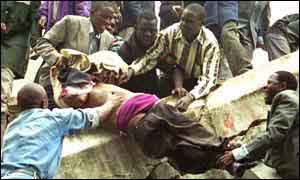 Kenya suffered its own tragedy in August 1998
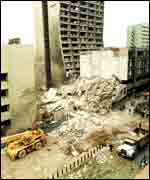
Julie Ogoyi was partially blinded when the United States embassy in Nairobi was blown up on 7 August 1998.
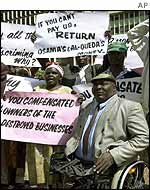
Two hundred and twenty-four people - mostly Kenyan - were killed in the bombings and 4,500 were injured. Twice a week, Julie makes a pilgrimage to a small, green park, in the middle of Nairobi's frenetic streets. "It comforts me to be here," she says, tucking her feet under a park-bench. " It reminds me that good can come out of evil." Julie is sitting in the memorial garden, amid flowering vines and young trees, built on the site of the former American embassy in Nairobi. In front of her, an arc-shaped monument is inscribed with the names of the dead. Kenyan victims But 11 September not only revived terrible memories in Kenya - it also re-opened old grievances. The Bush administration moved quickly to compensate relatives of 11 September, in payouts which could total a million dollars per family. There has been no such compensation for survivors of the Nairobi attack. In the memorial garden, a handful of Kenyans unfold cardboard placards. One reads, "You compensated your own - why discriminate against the Kenyan victims?"
This small demonstration organised by Bomb Blast Survivors Association - one of several victims' groups - is on the eve of the 11 September anniversary. One of those attending, Jamleck Gateru, complains that that, mentally, he has never been same since 7 August 1998. "I don't understand why the Americans just want to help their own. Is it because we are African?" he asks. The organisers had anticipated that hundreds of survivors would turn up to this demonstration - but only 24 came. The poor turnout reflects the mixed feelings that many survivors have about compensation. Julie Ogoyi, who belongs to another survivors' group, says carefully: "What we want is a compassionate consideration. It's like there is one loaf of bread. You have some - and I have some. We share it." The reluctance to criticise is partly because the US Government has been the major source of assistance for many Kenyan victims. The US Congress allocated a fund of $37 million to Kenya and $13 million to Tanzania, where the US embassy was blown up simultaneously. The money helped re-start businesses closed down by the bombing, paid for some victims' medical costs, post-traumatic counselling and school fees of orphaned children. The US fund runs out on 30 September. God will provide At the Medical Assistance Programme for bomb survivors, Mary Mwanza clutches a brown paper bag, bulging with six different kinds of medication. After the blast, Mary spent a year off work. In that time, she also miscarried. She now suffers from high blood pressure and asthma.
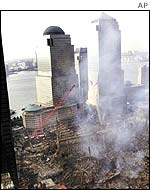
Mary could not afford to pay for the medicines herself - they would cost a third of her monthly salary. For the moment, the drugs are free - courtesy of the US Government. When asked what she will do when the Americans stop paying, she shrugs her shoulders: "God will provide". In 2000, 850 victims were receiving help from the programme - it is now 230 a month. Susan Mwangi - head of the unit - urges the US not to abandon those still in need. "People here understand that the money won't be equal. We're in a developing country - not in America. But we do wish that we could get a bit more. We could use it to help the survivors who are struggling." Embassy fortress The bombings in Africa were an early taste of the power and reach of the al-Qaeda network - and a forerunner for the much bigger atrocity in America on 11 September. Yet while security measures in Western capitals have been stepped up post-11September, in Nairobi there is little visible evidence of heightened vigilance.
The public relations officer at Kenya's International airport, Jomo Kenyatta airport, Selena Atieno, said: "There have been a lot of changes since 11 September". However, she declined to specify what these were, citing "security reasons". In a leafy suburb of Nairobi, a new US embassy is rising - fortress-like - from the red African soil. No expense has been spared here on security. Downtown, the Co-Operative Building - for so long a shattered shell - is almost ready to re-open for business. As the visible scars heal, Julie Ogoyi contemplates the lessons that Kenyans could pass onto Americans, on the first anniversary of 11 September. "I would tell them that there is light at the end of the tunnel. That the pain does diminish with time, so they just have to have the courage to face it." "That there will be one day when the gloom will be gone." | |
See also:  10 Sep 02 | Americas 01 Sep 02 | September 11 one year on 09 Sep 02 | Americas 11 Sep 01 | Africa 12 Sep 01 | Africa 14 Apr 99 | Africa Internet links: The BBC is not responsible for the content of external internet sites Top Africa stories now: Links to more Africa stories are at the foot of the page. | |||||||||||||||||||||||||||||||||||||||||||||||||||||||||||||||||||||||||||||||||||||||||||||||||||||||||||||||||||||||||||||||||||||||||||||||||||||||||||||||||||||||||||||||||||||||||||||||||||
| |
|  E-mail this story to a friend E-mail this story to a friend |
| |
| Links to more Africa stories |
| | | ||
 | ||||
 | | Back to top
| ||
| ---------------------------------------------------------------------------------- To BBC Sport>> | To BBC Weather>> | To BBC World Service>> ---------------------------------------------------------------------------------- © MMIII | News Sources | Privacy |