|
 |
 | | | | | | ||||||||||||||||||||||||||||||||||||||||||||||||||||||||||||||||||||||||||||||||||||||||||||||||||||||||||||||||||||||||||||||||||||||||||||||||||||||||||||||
| | | You are in: Africa | ||||||||||||||||||||||||||||||||||||||||||||||||||||||||||||||||||||||||||||||||||||||||||||||||||||||||||||||||||||||||||||||||||||||||||||||||||||||||||||||||
|
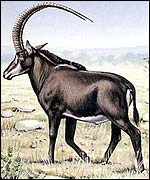
| | Friday, 30 August, 2002, 22:14 GMT 23:14 UK Rare African antelope 'rediscovered'  The giant sable is extremely rare and needs protection One of Africa's most beautiful antelopes, the giant sable, has been officially sighted for the first time in 30 years, scientists say. There were fears that the giant sable - which is found only in central Angola - had become extinct after decades of civil war. The mission to rediscover the elusive animal was mounted by South African and American scientists. Expedition leader, Professor Wouter van Hoven, from the Centre for Wildlife Management at Pretoria University, said he was excited and relieved. "Three separate sightings of the giant sable antelope were recorded," he said. "The first sighting was of two adult bulls, followed by a second bull and two juveniles." Switching tactics But he added that the giant sable, which only lives in one particular part of Angola, is extremely rare and needs urgent protection. Angola used to have some of the most spectacular wildlife in Africa, but almost all of it was destroyed during the 30-year civil war which ended in April, says the BBC's southern African correspondent Barnaby Phillips.
But he said interviews with tribal chiefs revealed that the animals were often sighted in the Luando reserve by locals so the expedition changed tactics and carried out ground surveys on foot. They recorded five separate sightings but were not able to take any photographs. Angolan symbol The giant sable is similar to the commonly found sable antelope, except for a variation in colour and longer horns of about 1.5 metres (five feet), and is believed to move mainly in herds grazing on the greenery of flood plains in the area. Mr Van Hoven said the expedition has proved that there is a viable breeding population in the Cangandala National Park. The giant sable is an important symbol in Angola; the national football team is named after it, and its majestic sweeping horns are portrayed on planes belonging to the national airline. The animal was last seen and recorded in 1972 - three years before civil war broke out between government forces and the National Union for the Total Independence of Angola (Unita). A cease-fire was signed this April. | | See also:  14 Aug 02 | Africa 14 Aug 02 | Africa 07 Aug 02 | Africa 02 Aug 02 | Africa Internet links: The BBC is not responsible for the content of external internet sites Top Africa stories now: Links to more Africa stories are at the foot of the page. | ||||||||||||||||||||||||||||||||||||||||||||||||||||||||||||||||||||||||||||||||||||||||||||||||||||||||||||||||||||||||||||||||||||||||||||||||||||||||||||||
| |
|  E-mail this story to a friend E-mail this story to a friend |
| |
| Links to more Africa stories |
| | | ||
 | ||||
 | | Back to top
| ||
| ---------------------------------------------------------------------------------- To BBC Sport>> | To BBC Weather>> | To BBC World Service>> ---------------------------------------------------------------------------------- © MMIII | News Sources | Privacy |