|
 |
 | | | | | | ||||||||||||||||||||||||||||||||||||||||||||||||||||||||||||||||||||||||||||||||||||||||||||||||||||||||||||||||||||||||||||||||||||||||||||||||||||||||||||||||||||||||
| | | You are in: Africa | ||||||||||||||||||||||||||||||||||||||||||||||||||||||||||||||||||||||||||||||||||||||||||||||||||||||||||||||||||||||||||||||||||||||||||||||||||||||||||||||||||||||||||
|
| | Wednesday, 28 August, 2002, 17:09 GMT 18:09 UK Uganda pulls troops out of Congo 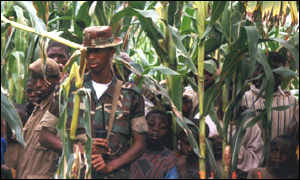 Troops from many African countries fought in DR Congo Uganda says it has begun withdrawing hundreds of its soldiers from the neighbouring Democratic Republic of Congo. The troops are being moved out of the north-eastern town of Beni, according to Ugandan army spokesman Shaban Bantariza. Once this withdrawal is completed, Uganda will have pulled out 13 of the 14 army battalions it deployed in DR Congo, according to the AFP news agency. A year ago, Uganda said it had withdrawn most of its troops from Congo. However, the government in Kampala later sent other soldiers back to quell tribal fighting in the north-east of the country.
The latest withdrawal comes two weeks after senior officials from the two countries agreed on a pull-out of Ugandan forces. Uganda first sent troops into Congo in 1998 in support of rebels seeking to oust the then president, Laurent Kabila. Rwandan troops also supported the rebels. Uganda and Rwanda later came into conflict when they chose to support different rebel groups. Angola, Zimbabwe, Chad and Namibia sent in troops to support the government. UN request A spokesman for MONUC, the United Nations force in DR Congo, said that he had witnessed the withdrawal of 242 Ugandan soldiers from Beni. Hamadoun Toure said that the UN had asked Uganda to keep its troops in the town of Bunia, also in the north-east of DR Congo, to ensure security there. The UN has not said how many Ugandan troops remain in DR Congo. More than 110 people were killed in clashes between rival rebel groups in Bunia earlier this month. Mr Bantariza confirmed that his country's troops would stay in the town, adding that soldiers in the northern town of Gbadolite would be flown back to Uganda later this week. Diplomatic row Rwanda is due to pull its armed forces out of the Congo under an agreement signed in July. But the two countries have swapped accusations over recent fighting in DR Congo, bringing the peace deal into question.
After a fresh round of fighting between Rwandan troops and armed groups in the South Kivu area of eastern DR Congo, the Congolese ambassador to the UN accused Rwanda of a flagrant violation of the ceasefire. Rwanda says its troops were forced to act because Kinshasa is continuing to offer moral, political, and material support to elements of the former Rwandan army and Rwandan Hutu militia groups, based in South Kivu. Under the terms of the Pretoria peace accord, the Congolese Government was meant to stop assisting these groups, prior to their disarming and repatriation to Rwanda. Rwanda would then withdraw its forces from Congo. In mid-August, Zimbabwe said it was withdrawing its remaining forces from DR Congo in recognition of the moves towards peace. | |
See also:  23 Aug 02 | Africa 13 Aug 02 | Africa 11 Aug 02 | Africa 30 Jul 02 | Africa 23 Jul 02 | Africa 25 Jan 01 | Africa Internet links: The BBC is not responsible for the content of external internet sites Top Africa stories now: Links to more Africa stories are at the foot of the page. | ||||||||||||||||||||||||||||||||||||||||||||||||||||||||||||||||||||||||||||||||||||||||||||||||||||||||||||||||||||||||||||||||||||||||||||||||||||||||||||||||||||||||
| |
|  E-mail this story to a friend E-mail this story to a friend |
| |
| Links to more Africa stories |
| | | ||
 | ||||
 | | Back to top
| ||
| ---------------------------------------------------------------------------------- To BBC Sport>> | To BBC Weather>> | To BBC World Service>> ---------------------------------------------------------------------------------- © MMIII | News Sources | Privacy |