|
 |
 | | | | | | ||||||||||||||||||||||||||||||||||||||||||||||||||||||||||||||||||||||||||||||||||||||||||||||||||||||||||||||||||||||||||||||||||||||||||||||||||||||||||||||||||||||||||||||||||||||||||||||||||||||||||
| | | You are in: Africa | ||||||||||||||||||||||||||||||||||||||||||||||||||||||||||||||||||||||||||||||||||||||||||||||||||||||||||||||||||||||||||||||||||||||||||||||||||||||||||||||||||||||||||||||||||||||||||||||||||||||||||||
|
| | Sunday, 11 August, 2002, 15:34 GMT 16:34 UK More deaths in Congo violence 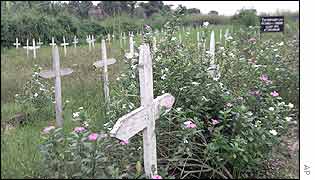 DR Congo's war has left more than two million dead A further 15 people have been found dead after recent violence in the north-eastern town of Bunia in the Democratic Republic of Congo. This brings the total number killed to at least 90, many of them women and children discovered in two mass graves in the area on THursday and Friday. A spokesman for the United Nations force in Kinshasa, Hamadoun Toure, said the latest victims were mostly soldiers, found in the town governor's residence on Sunday. The governor is reported to have fled.
A senior UN official flew to Uganda on Sunday to discuss the situation. In February, the UN Security Council asked the Ugandan army to use its influence over the Congolese rebel group in Bunia to prevent such killings, but according to BBC correspondent Mark Dummett, local residents say it has completely failed in this task. Mass graves The UN representative in DR Congo, Amos Namanga Ngongi, is due to discuss the deteriorating security situation around Bunia during talks in Kampala - including the alleged involvement of Ugandan troops. In the worst clashes, Ugandan tanks were seen supporting the capture of the governor's office in Bunia in support of one of the militias.
So far the final number killed is not known, and our correspondent says many of the rural areas outside Bunia are still inaccessible because of ongoing insecurity. "There are bound to be more dead," said the chief of staff of the UN force, Colonel Tim Watts. "The situation in Bunia is still pretty tense and our observers are unarmed, so it's difficult for them to go out and check," he said. Mineral wealth Congo's war, which has left an estimated two million dead, broke out in 1998.
Less than two weeks ago, a peace deal was signed in South Africa between the Congolese President, Joseph Kabila, and one of the key players in the four-year old war, President Paul Kagame of Rwanda. Mr Kagame has pledged to withdraw the thousands of troops he sent over the border in pursuit of Hutu rebels involved in the 1994 genocide of up to one million Tutsis and moderate Hutus. But correspondents say the number of other factions involved make it doubtful whether a peace deal with Rwanda alone will be decisive in ending the war. Thousands of other foreign troops remain in DR Congo - motivated primarily by the country's vast mineral deposits. Uganda and Burundi have long supported rebel groups, and at various times Angola, Chad, Namibia and Zimbabwe - despite all having problems at home - have sent forces to back the government in Kinshasa. | |
See also:  10 Aug 02 | Africa 30 Jul 02 | Africa 11 Jun 02 | Africa Internet links: The BBC is not responsible for the content of external internet sites Top Africa stories now: Links to more Africa stories are at the foot of the page. | ||||||||||||||||||||||||||||||||||||||||||||||||||||||||||||||||||||||||||||||||||||||||||||||||||||||||||||||||||||||||||||||||||||||||||||||||||||||||||||||||||||||||||||||||||||||||||||||||||||||||||
| |
|  E-mail this story to a friend E-mail this story to a friend |
| |
| Links to more Africa stories |
| | | ||
 | ||||
 | | Back to top
| ||
| ---------------------------------------------------------------------------------- To BBC Sport>> | To BBC Weather>> | To BBC World Service>> ---------------------------------------------------------------------------------- © MMIII | News Sources | Privacy |