|
 |
 | | | | | | |||||||||||||||||||||||||||||||||||||||||||||||||||||||||||||||||||||||||||||||||||||||||||||||||||||||||||||||||||||||||||||||||||||||||||||||||||||||||||||||
| | | You are in: Africa | |||||||||||||||||||||||||||||||||||||||||||||||||||||||||||||||||||||||||||||||||||||||||||||||||||||||||||||||||||||||||||||||||||||||||||||||||||||||||||||||||
|
| | Thursday, 25 July, 2002, 10:34 GMT 11:34 UK Tanzania's 'dogs of war' 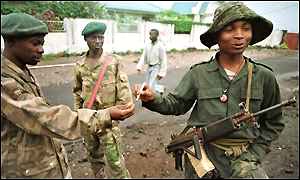 Soldiers from many countries are fighting in central Africa's wars The Tanzanian parliament was told on Tuesday that former army officers are being used as mercenaries in neighbouring countries. The men are being employed by the DR Congo and Ugandan armies, according to John Malacela, chairman of the Parliamentary Defence and Security Committee. Mr Malacela said that this development could endanger Tanzania's own security. But the news could do more than that, according to the BBC's Swahili Service. It believes that Tanzania's reputation as an honest broker and as a strictly neutral party in the conflicts afflicting its neighbours could be damaged by this.
In recent weeks the Burundian foreign minister has accused Tanzania of allowing Burundi rebels to use its territory to launch attacks into Burundi. The government in Bujumbura has often accused Tanzania of arming and training Hutu rebels. The admission that Tanzanians are working as mercenaries in Africa sheds a new light on the profile of the so-called "dogs of war". The image of mercenaries in Africa over the last 40 years has been of white soldiers from former colonial powers - particularly Belgium France or Britain - fighting to support African dictators or rebel movements or, more recently, of former South African special forces soldiers being paid to fight in Angola and Sierra Leone. Artillery Reporting to parliament, John Malacela said: "It is very dangerous for Tanzania to simply let her retired soldiers to be recruited abroad and used as mercenaries". The defence committee put forward the suggestion that the government should develop a policy for utilising the ex-army officers to Tanzania's benefit, employing the men either inside the country or for roles abroad. It also warned of the dangers to Tanzania of the continuing fighting in Burundi and in areas of DR Congo near to the Tanzanian border. The upsurge in fighting in Burundi in recent weeks has led to strained relations between Burundi and Tanzania.
Tanzania denies Burundian accusations of aiding the Hutu rebels. But the BBC's John Ngahyoma in Dar es Salaam says that the accusations have become more serious as the rebels have started using heavier artillery weapons than previously. Critical The parliamentary report has taken people by surprise. Ahmed Rajab of the London-based Africa Analysis told BBC Online that he was surprised by this, although he was aware that Tanzania had been giving assistance with training the DR Congo armed forces. In the past, Tanzania has been very critical of the use of mercenaries in Africa. In June, it sent back to France 12 suspected mercenaries whose plane had landed in Dar es Salaam while on its way to Madagascar. The Tanzanian Defence Minister, Professor Philemon Sarungi, is in Dodoma to attend parliament but has so far made no public comment on the report. | | See also:  18 Jul 02 | Africa 21 Jun 02 | Africa 23 Jul 02 | Africa 25 Jan 01 | Africa 14 Jul 02 | Africa 04 Jul 02 | Africa 12 Jul 02 | Country profiles Internet links: The BBC is not responsible for the content of external internet sites Top Africa stories now: Links to more Africa stories are at the foot of the page. | |||||||||||||||||||||||||||||||||||||||||||||||||||||||||||||||||||||||||||||||||||||||||||||||||||||||||||||||||||||||||||||||||||||||||||||||||||||||||||||||
| |
|  E-mail this story to a friend E-mail this story to a friend |
| |
| Links to more Africa stories |
| | | ||
 | ||||
 | | Back to top
| ||
| ---------------------------------------------------------------------------------- To BBC Sport>> | To BBC Weather>> | To BBC World Service>> ---------------------------------------------------------------------------------- © MMIII | News Sources | Privacy |