|
 |
 | | | | | | ||||||||||||||||||||||||||||||||||||||||||||||||||||||||||||||||||||||||||||||||||||||||||||||||||||||||||||||||||||||||||||||||||||||||||||||||||||||||||||||
| | | You are in: Africa | ||||||||||||||||||||||||||||||||||||||||||||||||||||||||||||||||||||||||||||||||||||||||||||||||||||||||||||||||||||||||||||||||||||||||||||||||||||||||||||||||
|
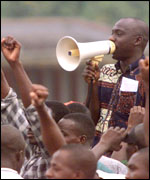
| | Thursday, 27 June, 2002, 13:08 GMT 14:08 UK Curfew after Ivory Coast clashes A curfew has been imposed in the town of Daloa in Ivory Coast following clashes which have left four people dead and dozens more injured. On Wednesday, a market was burnt down in the town when supporters of President Laurent Gbagbo's ruling party fought with activists from Alassane Ouattara's Rally of Republicans (RDR). The BBC's Kate Davenport in Daloa says that tension is high in the town in the run-up to local elections on 7 July because of political divisions along ethnic lines. A spokesman for the regional authorities said that a curfew would be in place until 15 July, a week after the local election, and that public meetings would be banned until 3 July. Ethnic divisions Earlier on Wednesday, the interior minister, who visited Daloa, had announced a 48-hour curfew after visiting the hospital.
Our correspondent says that ethnic tensions have risen since the arrival of northerners in Daloa, ethnic Dioula Muslims who tend to support Alassane Ouattara and his RDR. The native population of the town are ethnic Betes, like President Laurent Gbagbo and many members of his Ivorian Popular Front (FPI). They feel outnumbered by the northerners, who have migrated south to cultivate cocoa and other crops. The mayor of Daloa, Guede Guina, a member of the RDR, has accused the FPI of provoking the clashes to prevent the RDR from winning the elections. The RDR has now cancelled a visit to Daloa which Alassane Ouattara was supposed to make to the town on Thursday, in an attempt to defuse the tension. Clashes have spread beyond Daloa, and displaced people from the area have started arriving in the town. 'Go home' Distressed Malians and Guineans took shelter in the RDR headquarters, near the central mosque, on Wednesday evening. They say their houses have been burnt and they have been forced to leave by locals who told them to stop cultivating the land and go home. Our correspondent says there are fears that the elections are going to bring to the surface tensions which have not quite been resolved despite recent national reconciliation talks. Mr Ouattara was excluded from presidential election in 2000 poll because a court had ruled that he was not an Ivorian citizen. He denies this. The elections descended into violent clashes, with many northern Muslims killed in the commercial capital, Abidjan. Until General Guei seized power in December 1999, Ivory Coast was seen as a beacon of peace and economic prosperity in west Africa. | | See also:  26 Jun 02 | Africa 25 Jun 02 | Africa 31 May 02 | Africa 30 Jan 02 | Africa 15 Jan 02 | Africa 07 Mar 02 | Country profiles Internet links: The BBC is not responsible for the content of external internet sites Top Africa stories now: Links to more Africa stories are at the foot of the page. | ||||||||||||||||||||||||||||||||||||||||||||||||||||||||||||||||||||||||||||||||||||||||||||||||||||||||||||||||||||||||||||||||||||||||||||||||||||||||||||||
| |
|  E-mail this story to a friend E-mail this story to a friend |
| |
| Links to more Africa stories |
| | | ||
 | ||||
 | | Back to top
| ||
| ---------------------------------------------------------------------------------- To BBC Sport>> | To BBC Weather>> | To BBC World Service>> ---------------------------------------------------------------------------------- © MMIII | News Sources | Privacy |