|
 |
 | | | | | | ||||||||||||||||||||||||||||||||||||||||||||||||||||||||||||||||||||||||||||||||||||||||||||||||||||||||||||||||||||||||||||||||||||||||||||||||||||||||||||||||||||||||||||
| | | You are in: Africa | ||||||||||||||||||||||||||||||||||||||||||||||||||||||||||||||||||||||||||||||||||||||||||||||||||||||||||||||||||||||||||||||||||||||||||||||||||||||||||||||||||||||||||||||
|
| | Tuesday, 25 June, 2002, 08:40 GMT 09:40 UK Teargas targets Mozambique's unruly elephants Elephants will soon have to cope with a new threat
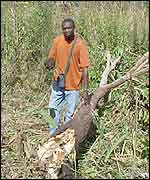
Eugenio Zubair was angry. He clutched a lighted firebrand and surveyed the wreckage of his field. Twenty minutes earlier a rampaging elephant had ripped up his juiciest bananas, eaten them and then trampled and crushed much of the rest of his field.
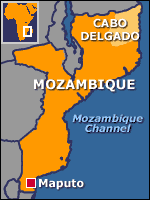
He was frightened and powerless to stop the old bull elephant destroying his family's food. Here in Cabo Delgado province in northern Mozambique, elephants are out of control. In some areas, such as those in the newly declared Quirimbas National Park, they are destroying between half and two-thirds of farmers' crops. Hooligans But in the next few weeks an experiment is about to begin. Elephants will be treated to doses of a locally concocted teargas - rather like football hooligans or rioters. "It is getting worse all the time," said Mr Zubair.
"The elephants are getting braver because we don't have anything to fight them with. In the past they used to shoot them, now people are not allowed to shoot them anymore, that seems to be the difference." There are believed to be some 2,500 elephants in Cabo Delgado, many of them concentrated in the wilderness of the Quirimbas Park. But 50,000 people also live in the park or just outside. Protected species During the colonial period and after, elephants that trampled crops were shot. Then followed the civil war. Here in Cabo Delgado, thousands of villagers fled from their homes and soldiers shot the elephants for their meat and for their ivory, which was traded for arms.
Since the end of the war in 1992, people have returned and elephants, now a protected species, are no longer being shot. With virtually no natural predators but man, elephant populations can double every 14 years and so their numbers are rising fast. But elephants and people both need water. Fields have been replanted near water sources and elephants, which became nocturnal here during the civil war have developed a taste for ripe, nutrient-rich crops rather than grass and leaves. Easy prey The silence of the night here is broken by the clanging of metal as frightened villagers try to scare off the elephants. But it is not working. The villagers are also sleeping in their fields in a bid to protect them, but every year around 20 are killed by the enraged elephants.
They charge them, slap them down with their trunks before kneeling on them to finish them off. Close to the coastal town of Mucojo, several settlements have been abandoned because in 2000 some 35 villagers sleeping in their fields were killed by man-eating lions, delighted to discover such easy prey. Hyenas too have been killing peasants who have been sleeping out trying to protect their fields. Surveying the wreckage of his crops of sugar cane and rice, Afonso Namilepe said: "The armed conflict has finished but another war has started." 'Pepper spray' Farmers here complain bitterly that the local authorities seem unwilling or unable to help.
"Sometimes it seems that the government cares more about the elephants than it does about us," said Mr Zubair. As the law now stands, elephants can only be shot if they are threatening human life - not property or fields. In a bid to help villagers, the World Wide Fund for Nature is beginning an experiment. Activists from Gecorena, a local activist and environmentalist group, want to see whether smoke bombs made from a foul mix of elephant dung and red hot chilli peppers or "piri piri" might not send the elephants into retreat. When lighted, the smoke has the same throat-burning effect as tear gas or pepper spray. Following the attack on his field Mr Zubair tried lighting one of the coconut-sized smoke bombs, which he had just been given. It took several minutes to catch, so clearly, the idea needs some refinement! But six local activists will be soon trained to shoot smoking dung pellets at the elephants, with weapons developed in neighbouring Zimbabwe. | | See also:  17 Apr 02 | Africa 04 Apr 00 | Africa 05 Oct 01 | Africa 04 Sep 01 | Africa 23 Aug 01 | Science/Nature Internet links: The BBC is not responsible for the content of external internet sites Top Africa stories now: Links to more Africa stories are at the foot of the page. | ||||||||||||||||||||||||||||||||||||||||||||||||||||||||||||||||||||||||||||||||||||||||||||||||||||||||||||||||||||||||||||||||||||||||||||||||||||||||||||||||||||||||||||
| |
|  E-mail this story to a friend E-mail this story to a friend |
| |
| Links to more Africa stories |
| | | ||
 | ||||
 | | Back to top
| ||
| ---------------------------------------------------------------------------------- To BBC Sport>> | To BBC Weather>> | To BBC World Service>> ---------------------------------------------------------------------------------- © MMIII | News Sources | Privacy |