|
 |
 | | | | | | ||||||||||||||||||||||||||||||||||||||||||||||||||||||||||||||||||||||||||||||||||||||||||||||||||||||
| | | You are in: UK: Wales | ||||||||||||||||||||||||||||||||||||||||||||||||||||||||||||||||||||||||||||||||||||||||||||||||||||||||
|
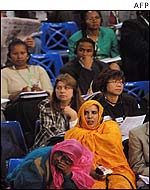
| | Thursday, 5 December, 2002, 10:07 GMT Global issues tackled at conference  Rhodri Morgan addressed the conference Changes in approaches to global issues such as renewable energy, health and trade - reached at the world summit in Johannesburg - have been discussed at a two-day conference in Swansea. Ways in which Wales can lead the world in applying the objectives agreed at the Sustainable Development World Summit in September were debated.
Wales is one of only three countries - alongside Estonia and Tasmania - with a legal duty to incorporate sustainable development issues into its policies. First Minister Rhodri Morgan and Environment Minister Sue Essex addressed the conference, which opened on Tuesday evening. Around 340 delegates attended the main day of the "Debate, Decisions, Direction" conference at Brangwyn Hall. On Wednesday, Mr Morgan related his experiences from the Johannesburg conference, where he chaired discussions between the heads of world regions. He also outlined how Wales is taking part in sustainable development issues. "Wales is recognised as benig at the cutting edge of sustainable development both at home and abroad - that is a huge honour, a huge responsibility and a huge opportunity. "Sustainable development is primarily about tackling poverty," he said. "Poverty of opportunity, justice and environment as much as poverty of resources and wealth. 'Difficult choices' But Mr Morgan warned that prioritising sustainable development was a brave move for Wales. "I cannot pretend that sustainable development offers all good news," he said.
"There are difficult choices to be made - but these are challenges we cannot back away from. "Doing nothing is not an option," he added. Ms Essex spoke about building on the actions taken so far to make Wales even more sustainable. The Johannesburg conference ran from 26 August to 4 September. One of the main successes was that governments agreed to halve the number of people lacking clean drinking water and basic sanitation by 2015. However, there were no decisions to increase overseas aid, or to improve the terms of trade, or to reduce the subsidies that developed countries pay their own producers. | |
  See also: 05 Sep 02 | In Depth 04 Sep 02 | Africa 03 Sep 02 | Politics Internet links: The BBC is not responsible for the content of external internet sites Top Wales stories now: Links to more Wales stories are at the foot of the page. | ||||||||||||||||||||||||||||||||||||||||||||||||||||||||||||||||||||||||||||||||||||||||||||||||||||||
 | |
|  E-mail this story to a friend E-mail this story to a friend |
| |
| Links to more Wales stories |
| | | ||
 | ||||
 | | Back to top
| ||
| ---------------------------------------------------------------------------------- To BBC Sport>> | To BBC Weather>> | To BBC World Service>> ---------------------------------------------------------------------------------- © MMIII | News Sources | Privacy |




 There are difficult choices to be made - but these are challenges we cannot back away from