|
 |
 | | | | | | ||||||||||||||||||||||||||||||||||||||||||||||||||||||||||||||||||||||||||||||||||||||||||||||||||||||||||||||||||||||||||||||||||||||||||||||
| | | You are in: UK: Scotland | ||||||||||||||||||||||||||||||||||||||||||||||||||||||||||||||||||||||||||||||||||||||||||||||||||||||||||||||||||||||||||||||||||||||||||||||||
|
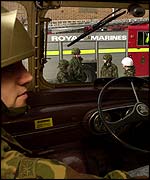
| | Tuesday, 21 January, 2003, 18:11 GMT First death during Scots fire dispute  The armed forces are providing cover An elderly man has become the first person to die in a blaze during the industrial action by firefighters in Scotland. Police and military personnel were called to the blaze in a first floor flat in north Glasgow and found his body after forcing their way into the property. Two military Green Goddess vehicles attended the fire in Young Terrace and the crews were accompanied by two breathing apparatus teams and a rescue support team. Police said an investigation was under way into the cause of the blaze, which was not thought to be suspicious.
A report was being prepared for the procurator fiscal, however police said it appeared the 63-year-old householder may have died prior to the alarm being raised. A Green Goddess crew entered the flat 27 minutes after an emergency call was received. The Army's Major Mark Philip said the decision when to go in was based purely on safety. "There was an operational decision that the entry made by the rescue team should be delayed until such time as the fire advisor, who was immediately on the ground straight after the police, was satisfied that it was safe for the rescue team to enter," he said. Superintendent Mike Keogh, of Strathclyde Police, said he was satisfied the military did everything they could in the circumstances. "At the moment I'm more than happy that the police and the military dealt with this incident effectively and efficiently in terms of the resources they had," he said. The death occurred as firefighters staged a 24-hour walkout in their dispute with local authority employers over pay and reforms. Industrial action was suspended by the Fire Brigades Union (FBU) at the end of last year amid hopes of a breakthrough but a failure to reach a settlement led to a fresh walkout, with more planned. John McDonald, executive council member of the Fire Brigades Union, said the death illustrated the need for a resolution in the dispute. He said: "Time is of the essence when you are dealing with fires and the sooner the trained firefighters are back on the streets the better. "They deal with these incidents every day and are well trained in the best ways to handle them. "So the sooner the firefighters get the deal they are looking for the better for all concerned." 'Providing cover' Scotttish Justice Minister Jim Wallace said: "This is a personal tragedy for the family and friends of the deceased man and my thoughts are with them. "It is also a tragic reminder to everyone of the need to do all they can to prevent fires from starting. "Fire safety is never more important than when the professional fire service is not providing cover." On Tuesday afternoon, a fresh glimmer of hope emerged that both sides in the dispute would get back round the negotiating table. FBU leader Andy Gilchrist told the BBC there was "every chance" that further strikes - scheduled for 28 January and 1 February could be suspended. Mr Gilchrist said he has written to the conciliation service Acas, suggesting that both sides should be invited back into talks without preconditions, hopefully on Wednesday or Thursday.
Royal Navy Commander Neil Jervis said: "Certainly within this region I have noticed a lessening of expectation of a strike. "We have been training on the ground to allow the public to see us and also to try and emphasise the safety issues." Meanwhile, Strathclyde's firemaster dismissed reports that he asked police to arrest striking firefighters if they leave the picket line to help with any local emergencies. It had been suggested that action would be taken because firefighters would not be insured in such circumstances. Jeff Ord, who is also president of the Fire Chiefs Association, told BBC Scotland that the FBU had been asked to agree protocols which would cover firefighters in such an event. He said they would not be insured if they were attending fires on an "ad hoc" basis. But he stressed: "A view would be taken on that at the time. "We wrote to the union on 18 December. They have not even replied. "So I'm afraid what's been in the newspapers over the last two days about me getting people arrested, even if I had the power to do that, is absolute rubbish." | |
See also:  21 Jan 03 | UK 21 Jan 03 | UK 12 Jan 03 | Scotland Internet links: The BBC is not responsible for the content of external internet sites Top Scotland stories now: Links to more Scotland stories are at the foot of the page. | ||||||||||||||||||||||||||||||||||||||||||||||||||||||||||||||||||||||||||||||||||||||||||||||||||||||||||||||||||||||||||||||||||||||||||||||
 | |
|  E-mail this story to a friend E-mail this story to a friend |
| |
| Links to more Scotland stories |
| | | ||
 | ||||
 | | Back to top
| ||
| ---------------------------------------------------------------------------------- To BBC Sport>> | To BBC Weather>> | To BBC World Service>> ---------------------------------------------------------------------------------- © MMIII | News Sources | Privacy |