|
 |
 | | | | | | |||||||||||||||||||||||||||||||||||||||||||||||||||||||||||||||||||||||||||||||||||||
| | | You are in: UK: Scotland | |||||||||||||||||||||||||||||||||||||||||||||||||||||||||||||||||||||||||||||||||||||||
|
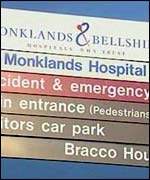
| | Friday, 13 December, 2002, 15:47 GMT Patient dies from rare bug  Monklands Hospital, where the patient was treated A female patient who contracted a rare bug that appears to be resistant to most effective antibiotics has died in a Scottish hospital. The patient, who was in her fifties, was treated in Monklands Hospital in North Lanarkshire, after being infected by a rare organism known as Glycopeptide-Intermediate Staphylococcus aureus (GISA). All patients, staff and close family members who may have come into physical contact with the patient have been identified and screening is being offered as a precautionary measure. The bug has increased resistance to the main antibiotics used for treating MRSA infections, vancomycin and teicoplanin. It is not thought to pose a threat to the public.
Some facts about the bug: Dr Alistair Leanord, infection control microbiologist, said the patient was given all available treatment. He said: "All appropriate antibiotic therapy was provided for this patient and rapid infection control procedures were implemented. "All patients, staff and close family members who might have come into physical contact with the patient in the Intensive Therapy Unit during the same period have been identified and screening is being offered as a precautionary measure.
"Notification has also been provided to all other staff within the hospital and to local general practitioners." Dr Jim Miller, Public Health Consultant for NHS Lanarkshire, said there was little risk to the public. He said it was rare to find any transmission of the organism from person to person and the hospital had taken every precaution necessary. Dr Stephanie Dancer, of the Scottish Centre for Infection and Environmental Health (SCIEH), echoed those views. She said there was little evidence to suggest the bug could spread. "We have been working closely with Monklands Hospital on this and are satisfied the patient received the appropriate management in line with infection control practice and that all steps have been taken to minimise the risk of any spread," Dr Dancer said. Dr John Browning, medical director for NHS Lanarkshire Acute Hospitals, said it was impossible to eradicate hospital infections. He said: "We put significant effort into minimising the risk of infections with stringent infection control measures along with audit and monitoring controls." Anyone with concerns or wishing further information on screening can contact 01236 747133. | | See also:  19 May 02 | Health 08 Feb 02 | Health 12 Jun 00 | Health 25 May 01 | Health 08 Apr 01 | Health 17 Feb 00 | Health 17 Feb 00 | Health Internet links: The BBC is not responsible for the content of external internet sites Top Scotland stories now: Links to more Scotland stories are at the foot of the page. | |||||||||||||||||||||||||||||||||||||||||||||||||||||||||||||||||||||||||||||||||||||
| |
|  E-mail this story to a friend E-mail this story to a friend |
| |
| Links to more Scotland stories |
| | | ||
 | ||||
 | | Back to top
| ||
| ---------------------------------------------------------------------------------- To BBC Sport>> | To BBC Weather>> | To BBC World Service>> ---------------------------------------------------------------------------------- © MMIII | News Sources | Privacy |