
|
 |
 | | | | | | |||||||||||||||||||||||||||||||||||||||||||||||||||||||||||||||||||||||||||||||||||||||
| | | You are in: UK: Scotland | |||||||||||||||||||||||||||||||||||||||||||||||||||||||||||||||||||||||||||||||||||||||||
|
| | Monday, 2 December, 2002, 11:10 GMT Cairngorms haven for rare birds 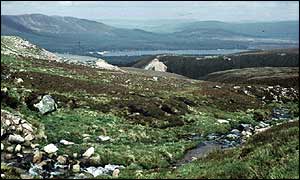 Planners say wild areas must not be 'cordoned off' Some of the rarest birds in Britain have been found using special feeding areas set aside for them in the Cairngorms. The group planning the creation of the Cairngoms National Park says 34 species of threatened and declining bird species have been listed. They include the capercaillie which faces extinction within a decade. Conservationists say the success of the scheme shows the importance of people being involved in protected areas rather than being excluded from them.
These are set aside deliberately to encourage declining bird species. Small-scale cereal farming in the area died out after the 1970s. When the 12 "upland grain" sites were monitored, researchers recorded 50 different species of bird. Ice age As well as the capercaillie, they logged black grouse, grey partridge, linnet, skylark, song thrush and reed bunting. Nearly �5m in European funding has now been secured to improve habitats for the capercaillie. Dr Peter Cosgrove, the biodiversity officer appointed to promote the action plan, said: "It was immediately apparent that the Cairngorms area required special attention if the species and habitats here were to survive and flourish. "In many cases, such as mountain habitats and native pinewood, the Cairngorms holds a large proportion of the total UK resource."
It was vital that farmers, crofters, foresters, landowners, industrialists, academics and particularly local communities, were involved in the action plan at every stage. Dr Cosgrove said: "Historical studies demonstrate that the landscape we see today has been shaped by human activities since the end of the last ice age, around 11,000 years ago. "The choice is not between human interference and non-interference, but between the type and extent of management that should take place." Park boundaries Last month the Scottish Executive published the designation orders that will create the Cairngorms national park next year. The orders extended the original proposed boundaries of the park. They also made it clear that the Park Authority and the local authorites in the area will share planning powers. Previously the National Trust for Scotland had warned that the national park would fail to deliver the economic development and landscape protection which is urgently needed. | | See also:  25 Sep 02 | Scotland 13 Sep 00 | Scotland 24 Jul 02 | Scotland 30 May 02 | Scotland 22 Aug 01 | Scotland Internet links: The BBC is not responsible for the content of external internet sites Top Scotland stories now: Links to more Scotland stories are at the foot of the page. | |||||||||||||||||||||||||||||||||||||||||||||||||||||||||||||||||||||||||||||||||||||||
| |
|  E-mail this story to a friend E-mail this story to a friend |
| |
| Links to more Scotland stories |
| | | ||
 | ||||
 | | Back to top
| ||
| ---------------------------------------------------------------------------------- To BBC Sport>> | To BBC Weather>> | To BBC World Service>> ---------------------------------------------------------------------------------- © MMIII | News Sources | Privacy |






