|
 |
 | | | | | | ||||||||||||||||||||||||||||||||||||||||||||||||||||||||||||||||||||||||||||||||||||||||||||||||
| | | You are in: UK: Scotland | ||||||||||||||||||||||||||||||||||||||||||||||||||||||||||||||||||||||||||||||||||||||||||||||||||
|
| | Monday, 4 November, 2002, 00:21 GMT The lifelong impact of poverty 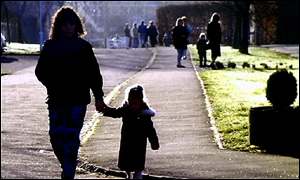 One in three children are said to be living in poverty
A report has suggested that poverty is on the rise in Scotland, with almost a third of all children living in a low-income household. The independent study said that efforts to tackle the problem north of the border have stalled.  Poverty means diminished life chances. For some it may mean going without the essentials, such as sufficient food, adequate housing, heating and enough clothing. For many it will also mean living without access to the services and social activities the rest of us take for granted. For the one in three poor children in Scotland this is especially damaging.
Children learn to lower their expectations. They learn not to ask their parents for basic things, like not mentioning a school trip because they know the extra costs will cause their parents heartache. Instead they may make excuses and say they do not want to go, or sometimes even pretend to be sick on the day of the trip. When our report shows that three in 10 households in Scotland live in fuel poverty this is more than academic statistics. It actually means children being cold, becoming sick more often and getting illnesses that affect them for the rest of their life, like asthma. It means their parents stressing over gas bills and getting into debt. Earn less Poor children attain less from education for these reasons and more. Poverty is passed from generation to generation. Today's poor child will likely be tomorrow's poor pensioner. Children whose parents are unemployed are more likely to be unemployed themselves when they are of working age. They will leave school earlier and they will earn less throughout their life. Hundreds of thousands of families are refused government grants for basic items like beds, bedding, cookers, gas fires or curtains and live with the dreadful burden of debt every year.
When we discuss the National Health Service we do not hark back to Victorian times, saying that the sick are provided for as long as they have blankets and gas lamps. We talk of the latest drugs, modern technology and of needing well trained and paid nurses. Why then do we carry these Victorian notions when discussing poverty? Children do not go to school with rickets and without shoes on their feet. That is because modern poverty in Scotland manifests itself in different ways: it means more debt, homelessness, coronary heart disease and cancers, an earlier death and families coping in different ways. 'Collective investment' Consequently we need modern answers to these modern problems. We need massive investment in our public services and social security system to end poverty in Scotland. Crucially, we all need to agree that children are a collective investment rather than a private cost and the sole responsibility of their parents. Then we can end this catalogue of failure and provide every child with a decent start in life. | | See also:  04 Nov 02 | Scotland 17 Sep 02 | Scotland 10 May 02 | Scotland 18 Feb 02 | Scotland 22 Jan 02 | Scotland 04 Dec 00 | Scotland Internet links: The BBC is not responsible for the content of external internet sites Top Scotland stories now: Links to more Scotland stories are at the foot of the page. | ||||||||||||||||||||||||||||||||||||||||||||||||||||||||||||||||||||||||||||||||||||||||||||||||
| |
|  E-mail this story to a friend E-mail this story to a friend |
| |
| Links to more Scotland stories |
| | | ||
 | ||||
 | | Back to top
| ||
| ---------------------------------------------------------------------------------- To BBC Sport>> | To BBC Weather>> | To BBC World Service>> ---------------------------------------------------------------------------------- © MMIII | News Sources | Privacy |