
|
 |
 | | | | | | ||||||||||||||||||||||||||||||||||||||||||||||||||||||||||||||||||||||||||||||||||||||
| | | You are in: UK: Scotland | ||||||||||||||||||||||||||||||||||||||||||||||||||||||||||||||||||||||||||||||||||||||||
|
| | Thursday, 31 October, 2002, 12:13 GMT Falcon numbers cut by bad weather 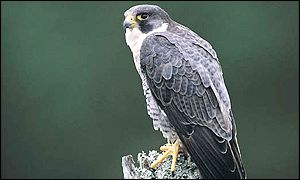 Numbers have been affected by the weather A fall in the number of peregrine falcon chicks surviving in Scotland has been blamed on bad weather. Early results from the 2002 national peregrine falcon survey reveal poor breeding success for one of the UK's rarest birds. Experts are hoping the fall is just a temporary reversal in fortunes, but it is a definite setback for a species which has been persecuted for several decades. The research was organised by the British Trust for Ornithology and supported by Scottish Raptor Study Groups and Scottish Natural Heritage (SNH).
A national survey of peregrines in Scotland carried out in 1991 recorded 625 breeding pairs. Data this year suggests the numbers of breeding pairs remains the same in some areas, but successful nests are down. In Central Scotland and Western Perth and Kinross, the overall number of successful nests was half that recorded a decade ago. Much of the failure is likely to have been due to severe weather in spring and early summer. But other trends reported by fieldworkers include reduced occupancy of a number of traditional breeding sites in upland areas. There are also some reports of suspected persecution of the birds, including parts of south-east and north-east Scotland. Professor Des Thompson, principal uplands advisor for SNH and chair of the Scottish Raptor Monitoring Group, said: "These early signs are worrying, not least because the peregrine is known to be such a good indicator of the health of the environment. 'Disappointing' "We are fortunate to be receiving preliminary results so quickly from the Scottish Raptor Study Groups." Professor Jeremy Greenwood, director of the British Trust for Ornithology, said: "This year, the Scottish Raptor Study Groups and other birdwatchers covered almost the whole of Scotland, including the remotest areas. "The apparent poor breeding success is disappointing but until the data have been fully analysed we shall not know whether it was just a particularly poor season or a sign of a long-term pattern." Patrick Stirling-Aird, of the Scottish Raptor Study Groups, said: "While this year's poor weather, with its impact on breeding success, may have been a one-off event, there is concern about the longer term trends, in certain parts of Scotland, of desertion of many peregrine territories that were occupied at the time of the last national survey in 1991." | | See also:  25 Jun 02 | England 09 Jun 02 | N Ireland 04 Apr 02 | Wales 03 Jan 02 | England 13 Dec 01 | England 30 May 01 | UK 29 May 00 | Scotland Internet links: The BBC is not responsible for the content of external internet sites Top Scotland stories now: Links to more Scotland stories are at the foot of the page. | ||||||||||||||||||||||||||||||||||||||||||||||||||||||||||||||||||||||||||||||||||||||
| |
|  E-mail this story to a friend E-mail this story to a friend |
| |
| Links to more Scotland stories |
| | | ||
 | ||||
 | | Back to top
| ||
| ---------------------------------------------------------------------------------- To BBC Sport>> | To BBC Weather>> | To BBC World Service>> ---------------------------------------------------------------------------------- © MMIII | News Sources | Privacy |



