
|
 |
 | | | | | | ||||||||||||||||||||||||||||||||||||||||||||||||||||||||||||||||||||||||||||||||||||||||
| | | You are in: UK: Scotland | ||||||||||||||||||||||||||||||||||||||||||||||||||||||||||||||||||||||||||||||||||||||||||
|
| | Wednesday, 23 October, 2002, 15:08 GMT 16:08 UK Scientists launch leukaemia project 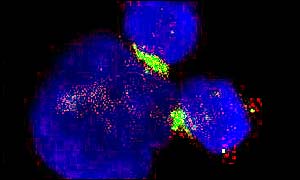 The aim is to create immune cells Researchers are to study whether specially-adapted cells can fight leukaemia in patients who have suffered a relapse. Scientists at Edinburgh University predict that the project could help thousands of people with acute myeloblastic leukaemia (AML), one of the most common forms of the condition in adults. The research will involve people from across Scotland, as well as patients from Manchester, Southampton and Newcastle. If it proves a success it could offer a way of destroying residual leukaemic cells which cannot be detected by microscopes.
About 2,000 new cases of AML are diagnosed every year in the UK. Almost three-quarters of patients achieve complete remission of the disease after chemotherapy treatment. However, the majority of elderly patients and more than half the young sufferers die after suffering a relapse. Those taking part in the study will donate bone marrow or blood cells before undergoing chemotherapy treatment. If they go into remission, their stored leukaemic cells will be specially cultured and changed into cells which are injected back into the patient. The patients will then be carefully monitored for clinical and immunological responses. Harder to treat Haematologist Dr Marc Turner, who will head the study, said relapse was caused by residual leukaemic cells which were below a level which could be detected by microscope. "Sometimes, they can cause the disease to restart and it is much harder to treat the second time around," he said. "Methods of eliminating this minimal residual disease, such as bone marrow transplantation, can be successful but this form of treatment is only suitable for younger patients who are able to withstand the side effects of the treatment.
"However, research work during the past few years has shown that it is possible to grow leukaemic cells in the laboratory and force them to change into a kind of immune cell which can lead to the destruction of leukaemia cells." Dr Turner said he was optimistic about the success of the project, which will last for up to 18 months. The trial is funded by the Leukaemia Research Fund and the Scottish National Blood Transfusion Service. The fund's scientific director, Dr David Grant, said: "The study of immunology - harnessing the body's immune system to fight leukaemia - has advanced amazingly over the last 20 years. "It is now crucial that we translate this knowledge into benefits for patients." | | See also:  22 Oct 02 | Health 05 Aug 02 | Health 22 Jun 02 | Health 27 Mar 02 | Health 27 Nov 01 | Health Internet links: The BBC is not responsible for the content of external internet sites Top Scotland stories now: Links to more Scotland stories are at the foot of the page. | ||||||||||||||||||||||||||||||||||||||||||||||||||||||||||||||||||||||||||||||||||||||||
| |
|  E-mail this story to a friend E-mail this story to a friend |
| |
| Links to more Scotland stories |
| | | ||
 | ||||
 | | Back to top
| ||
| ---------------------------------------------------------------------------------- To BBC Sport>> | To BBC Weather>> | To BBC World Service>> ---------------------------------------------------------------------------------- © MMIII | News Sources | Privacy |





