
|
 |
 | | | | | | ||||||||||||||||||||||||||||||||||||||||||||||||||||||||||||||||||||||||||||||||||||||
| | | You are in: UK: Scotland | ||||||||||||||||||||||||||||||||||||||||||||||||||||||||||||||||||||||||||||||||||||||||
|
| | Thursday, 3 October, 2002, 11:32 GMT 12:32 UK Experts tracking hawk fear worst 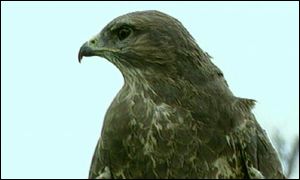 Aftar a marathon flight the buzzard is drifting at sea A young buzzard which got lost at sea while migrating to Africa for the winter is feared dead. The rare honey buzzard, which only learned to fly a month ago, went off course after it was caught in difficult weather conditions over the Atlantic. A team of ornithologists who had been tracking the rare bird of prey by satellite after it left its birthplace in Scotland say the news is "really sad". The latest signals received show the buzzard still drifting in the open Atlantic Ocean 300 kilometres from Madeira.
However, it cannot feed while at sea and is only drifting slowly at about 1km an hour. The tracking system estimates that it made the longest flight ever recorded by a bird of prey and was in the air for more than 100 hours during a journey in excess of 5,000km. Roy Dennis, of the Highland Foundation for Wildlife, said: "The young buzzard has gone a long time without food and is now drifting in the wrong direction. Mysteries of migration "It is very, very sad and we are all really disappointed. Sometimes nature is very harsh. "Sadly, we've got this news on the very day that bird's father, which we are also tracking, reached his wintering area in the tropical forests of Ghana." The two honey buzzards were being tracked as part of an attempt to learn the mysteries of their migration south. The Forestry Commission and the Highland Foundation for Wildlife teamed up to follow their journey. Devices were fitted to the birds at a secret location in the Scottish Highlands earlier this year. The adult male also travelled more than 5,000 km. Honey buzzards were given their name because they eat wasp grubs and larvae. Thought to have initially come to Scotland from Scandinavia, they migrate to equatorial Africa every winter. | | See also:  18 Sep 02 | England 20 Aug 02 | Scotland 04 Apr 02 | England 22 Jun 01 | Scotland Internet links: The BBC is not responsible for the content of external internet sites Top Scotland stories now: Links to more Scotland stories are at the foot of the page. | ||||||||||||||||||||||||||||||||||||||||||||||||||||||||||||||||||||||||||||||||||||||
| |
|  E-mail this story to a friend E-mail this story to a friend |
| |
| Links to more Scotland stories |
| | | ||
 | ||||
 | | Back to top
| ||
| ---------------------------------------------------------------------------------- To BBC Sport>> | To BBC Weather>> | To BBC World Service>> ---------------------------------------------------------------------------------- © MMIII | News Sources | Privacy |





