|
 |
 | | | | | | ||||||||||||||||||||||||||||||||||||||||||||||||||||||||||||||||||||||||||||||||||||||||||||||||||||||||||||||||||||||
| | | You are in: UK: Scotland | ||||||||||||||||||||||||||||||||||||||||||||||||||||||||||||||||||||||||||||||||||||||||||||||||||||||||||||||||||||||||
|
| | Monday, 23 September, 2002, 14:15 GMT 15:15 UK Adults warned of meningitis risk 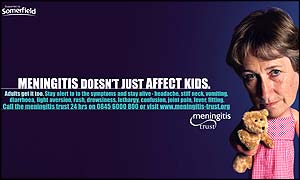 The trust wants to raise awareness among adults The number of Scottish adults contracting meningitis has shown a significant increase, according to a charity. The Meningitis Trust for Scotland said the illness has been on the rise in adults in recent years - although most people still believe that it is a child-centred illness. Now the charity has launched a campaign stressing that meningitis does not only affect children. Of the 177 cases of meningitis notified to Scottish health officials in the 12 months to August, 25% involved adults.
That compared to a rise of about 47% in England and Wales. A survey commissioned by the Meningitis Trust, which launched an awareness week on Monday, suggested that 90% of adults did not know they were at risk. The charity has unveiled a poster campaign, in conjunction with supermarket chain Somerfield, with the theme "Adults get it too". It is urging adults to familiarise themselves with the symptoms, which include:
Meningitis can be caused by bacteria, viruses and fungi. It leads to an inflammation of the meninges or lining surrounding the brain. The trust said symptoms may not appear at the same time or in any particular order, but knowing them could mean the difference between life and death. Trust chief executive Philip Kirby said: "It is hugely worrying that meningitis is still seen as a disease that only affects children and we hope that our Adults Get it Too Campaign will raise awareness and put an end to complacency. "Many adults who become sick do not seek immediate medical attention, they go to bed, take a couple of paracetemol and hope they'll feel better in the morning. "But meningitis can kill within hours and adults need to take immediate action if meningitis strikes."
Angela Little told BBC Scotland that her husband Robert developed an ear infection in May 2001. She said neither hospital staff nor the family thought Robert was suffering from meningitis - until he started vomiting and losing consciousness four days later. "They (the doctors) actually told me after they did the scan that it was septicaemia," she said. "So they said to me that what they would do overnight was pump as many antibiotics into his body as they could to try and kill off the infection. "But by the Wednesday morning when we got back to the hospital, they had to get my consent to take brain cell tests. "Basically there was no activity in his brain and technically he was brain dead, it was only the machines that were keeping him alive. "It was as if you were watching it happen to someone else, it wasn't really you." | |
See also:  24 Sep 01 | Education 03 Jan 01 | Health 03 Jan 01 | Health 31 Jan 00 | Health Internet links: The BBC is not responsible for the content of external internet sites Top Scotland stories now: Links to more Scotland stories are at the foot of the page. | ||||||||||||||||||||||||||||||||||||||||||||||||||||||||||||||||||||||||||||||||||||||||||||||||||||||||||||||||||||||
| |
|  E-mail this story to a friend E-mail this story to a friend |
| |
| Links to more Scotland stories |
| | | ||
 | ||||
 | | Back to top
| ||
| ---------------------------------------------------------------------------------- To BBC Sport>> | To BBC Weather>> | To BBC World Service>> ---------------------------------------------------------------------------------- © MMIII | News Sources | Privacy |