|
 |
 | | | | | | ||||||||||||||||||||||||||||||||||||||||||||||||||||||||||||||||||||||||||||||||||||||||||||||||||||||||||||||||||||||||
| | | You are in: UK: Scotland | ||||||||||||||||||||||||||||||||||||||||||||||||||||||||||||||||||||||||||||||||||||||||||||||||||||||||||||||||||||||||||
|
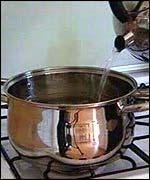
| | Tuesday, 6 August, 2002, 18:19 GMT 19:19 UK Water supply problems persist 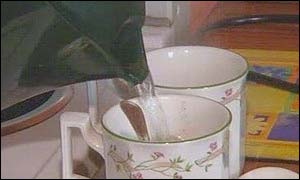 People have been urged to boil all tap water A Scottish Water chief has said he understands the frustration felt by customers over the contamination of supplies. Jon Hargreaves, chief executive for Scottish Water, said public health was its "top priority" and everything was being done to correct the recent problems. About 140,000 people in Glasgow are still being advised to boil their tap water after the parasite cryptosporidium was found in supplies from Mugdock Reservoir in Milngavie, East Dunbartonshire. Earlier, ministers were accused of failing to act on a report warning about the risk of contamination to Glasgow's water supplies.
A study was published last year following an outbreak of cryptosporidium which left one woman dead. The Scottish National Party claims that the Scottish Executive was made aware of the risk of further infection - but was involved in a "cover-up". Environment Minister Ross Finnie said action had been taken on the key recommendations - and pointed out that the current contamination had been spotted by monitoring procedures suggested in the report. The alert was issued on Saturday evening and there is still no indication of when it will be safe to drink. Scottish Water has apologised for "confusion" after it emerged that there had been a delay in telling thousands more people in Clydebank that they were also affected. Hospital treatment The new unitary authority had already defended itself against allegations of a 24-hour delay in telling the public about the discovery of the parasite in supplies. The latest controversy centres on a report which was published in November last year. It was commissioned by Greater Glasgow Health Board following a cryptosporidium outbreak in the city two years ago. One woman died and six other people required hospital treatment. The SNP said the report had identified a "continuing risk" of cryptosporidium in the water supply. "That just blows an absolute hole in the argument that this has been due to some freakish weather, an act of God," environment spokesman Bruce Crawford told BBC Radio Scotland. He said the report also recommended the introduction of an ongoing monitoring process so people could be alerted at an early stage.
However, Mr Finnie rejected the SNP claims. "The water works at Milngavie is not capable of dealing adequately or properly with the cryptosporidium," he said. "The fact is that from time to time, even without the flooding that we had in the last two weeks, there are far too regularly traces of cryptosporidium found at the Milngavie plant." Mr Finnie said that following the report the water authority had been required to put in place a monitoring procedure due to the potential risk. This monitoring detected the rising levels of cryptosporidium last week and reported the matter to Greater Glasgow Health Board on Friday when they reached a certain level. The health board was notified again on Saturday when they rose further, and the health authority took the decision to issue the boiling advice. Mr Finnie said the board and the water authority had agreed it was not sensible to create a "public health scare" every time the levels rose.
He also pointed out that the report said the only satisfactory way of dealing with the problem was the construction of a new water works. "We have responded to that. The plans are up, they are before the local planning authority," he said. However, Mr Finnie agreed that the failure to initially alert people in Clydebank had been "a very serious error" by Scottish Water. Danny McAfferty, leader of West Dunbartonshire Council, said people were unhappy. He said: "There's an awful lot of questions to be answered and I'm quite sure that after this crisis has been resolved that we will be asking those questions. "The main priority at the moment is to help those people in need, but undoubtedly they are unhappy and very angry." Scottish Water has set up a helpline on 0845 600 88 55. Anyone concerned about their health should contact NHS Scotland on 0800 22 44 88. Full details of streets affected are on the Scottish Water website. | |
See also:  05 Aug 02 | Scotland 05 Aug 02 | Scotland 05 Aug 02 | Scotland 04 Aug 02 | Scotland 26 Oct 01 | Scotland Internet links: The BBC is not responsible for the content of external internet sites Top Scotland stories now: Links to more Scotland stories are at the foot of the page. | ||||||||||||||||||||||||||||||||||||||||||||||||||||||||||||||||||||||||||||||||||||||||||||||||||||||||||||||||||||||||
| |
|  E-mail this story to a friend E-mail this story to a friend |
| |
| Links to more Scotland stories |
| | | ||
 | ||||
 | | Back to top
| ||
| ---------------------------------------------------------------------------------- To BBC Sport>> | To BBC Weather>> | To BBC World Service>> ---------------------------------------------------------------------------------- © MMIII | News Sources | Privacy |