|
 |
 | | | | | | ||||||||||||||||||||||||||||||||||||||||||||||||||||||||||||||||||||||||||||||||||||||||||||||||||
| | | You are in: UK: Politics | ||||||||||||||||||||||||||||||||||||||||||||||||||||||||||||||||||||||||||||||||||||||||||||||||||||
|
| | Monday, 3 February, 2003, 09:32 GMT Thoughts of Chairman May 
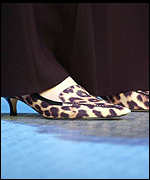
"Given all the publicity, if you went into the street and asked most people... they'd say leopard-print kitten heels," says Theresa May, triumphantly linking the footwear she is best known for with the far less popular party of which she is chairman.
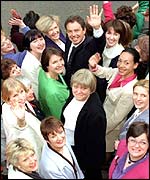
The image of racy kitten heels is a far cry from the demographic reality of her party. The average age of the Tory membership is well over 60 years old and rising. Meanwhile, women under the age of 45 account for less than 2 per cent of the membership. Occupational therapist Is this the chief reason for its apparent inability to propel more Tory women into parliament? "Yes, partly it is about the fact that we have an elderly membership," Ms May admits. "Some of those people, they might themselves not have been in the workplace at a time when women were more career-oriented models. "So they don't necessarily perceive a woman in a career role."
Efforts to change that perception have got nowhere. Of the 60 local parties that have so far selected parliamentary candidates, a mere nine have picked women. Professional advice from an occupational therapist is the latest treatment party chiefs have turned to in the hope of dismantling members' reluctance to back women as parliamentary contenders. Quotas on cards Hands-off encouragement having failed, surely the time has come for more concrete measures? She insists that before any further selections take place after the local elections in May, the party needs time to "take stock" of those already completed. It already appears a strong bet, however, that a more interventionist approach could soon be on the cards. "We need to do more. We need to have more women and ethnic minority candidates," she is already certain. "What we are looking at now is how we achieve that aim."
"I certainly think that whatever happens, getting more women onto the list in the first place is important." Quotas for women appears the most likely route. Before becoming chairman, Ms May was a firm backer of quotas for women and ethnic minority candidates on parliamentary selection shortlists in winnable seats. She even called for a rethink in the Tory opposition towards all-women shortlists - even now, she sounds ambiguous about them: "I've always said I didn't think the party would go that way and I don't think it's necessarily the right thing to do". Complacent But quotas are far from ruled out. "I did propose a 50-50 gender split list," she affirms. "So there are other options - we're looking at a whole variety of things that could be done." The Tory Party is a victim of its own past success, she maintains. Its internal mechanisms were neglected for far too long as it enjoyed the fruits of power, only realising in opposition it had failed to keep the machine in a healthy state.
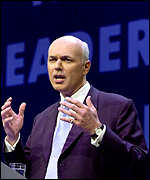
"[But] it's very easy when you're in government for 18 years to just carry on being complacent, I guess, in party structural terms - sometimes there is a natural process there that you have to actively mitigate against. "Senior people in the party are very caught up in the business of government. By definition they don't have the time to give to the party structure itself and what's happening in the party." Deadline looms On winning the Conservative leadership Iain Duncan Smith declared: "I believe we have a year and a half to establish our credentials as a party that's relevant. We don't have four years, we have 18 months." That self-imposed deadline takes us to April this year - just eight weeks left. "I think we have already moved away from a position where people thought we just weren't worth thinking about to a point where people are saying yes it is worth look at this party," says Ms May. But what evidence is there for this rosy outlook? "Well, there isn't the polling evidence," she concedes, "because I don't think we're at the point yet where people have said 'Yes we're disillusioned with Labour and we're going to vote Conservative'." But "that's the course Iain set us, and there are certain staging posts on to that point." Low ambition for locals The Tories have been stalled at this particular staging post for a long time. Nor will they be moving beyond it any time soon, by the party's own reckoning; they have publicly set themselves the startlingly low target of winning a mere 30 council seats in May. Lowering expectations before an unimpressive poll is standard procedure followed by all political parties, but this one is unprecedented. Not only have the Conservatives have all but admitted defeat, they have also accepted that the "churning" of seats between parties will see them gain from Labour but lose to Lib Dems - in effect ceding the Liberal Democrat case that Charles Kennedy's troops are making headway in invading Tory territory.
This is technically true, but so is the fact what the Conservatives really did in 1999 was largely to recapture ground lost through their abysmal local elections performance in 1995 - the time-before-last these seats were up for grabs. "It was from a low, yes, but we also did better than just regaining from a low point would have suggested," says Ms May. "It is a difficult battleground in the numbers sense for us - realistically, we're looking at 30 gains." | | See also:  22 Jan 03 | Politics 07 Oct 02 | Politics 07 Oct 02 | Politics 18 Dec 02 | Politics 23 Jul 02 | Politics 29 Dec 02 | Politics Internet links: The BBC is not responsible for the content of external internet sites | ||||||||||||||||||||||||||||||||||||||||||||||||||||||||||||||||||||||||||||||||||||||||||||||||||
 | |
|  E-mail this story to a friend E-mail this story to a friend |
| |
|
| | | ||
 | ||||
 | | Back to top
| ||
| ---------------------------------------------------------------------------------- To BBC Sport>> | To BBC Weather>> | To BBC World Service>> ---------------------------------------------------------------------------------- © MMIII | News Sources | Privacy |






 I don't think we're at the point yet where people have said 'Yes we're disillusioned with Labour and we're going to vote Conservative