|
 |
 | | | | | | |||||||||||||||||||||||||||||||||||||||||||||||||||||||||||||||||||||||||||||||||||||||||||||||||||||||||||||||||||||
| | | You are in: UK: Politics | |||||||||||||||||||||||||||||||||||||||||||||||||||||||||||||||||||||||||||||||||||||||||||||||||||||||||||||||||||||||
|
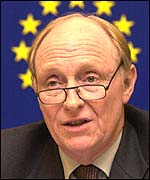
| | Wednesday, 29 January, 2003, 08:40 GMT US urged to build global consensus  The UN role is crucial in the Iraq crisis, says Mr Kinnock
He told BBC News Online that the Iraq crisis could not be "detached" from other issues such as the Kyoto Protocol and the Anti-Ballistic Missile treaty. Mr Kinnock said the backing of the United Nations is crucial in attempts to disarm Iraq.
Mr Kinnock acknowledged a sense in Europe that the US has been "less than energetic" in creating a global consensus in other areas. He said there has been "great disturbance" at the "isolationism" of some of President Bush's policies, such as the refusal to sign up to the Kyoto Protocol on the environment, the withdrawal from the Anti-Ballistic Missile treaty and the imposition of tariffs on foreign steel. Detached Mr Kinnock said: "It's no accident that the people who regard themselves to be most well disposed towards America, and I include myself in that, are amongst the most concerned."
"When it comes to the crunch like the Iraq crisis people call up their other references and they are bound to say 'how could the USA be in our view wrong on all those things and right on this one?' "(At) the time when the maximum degree of inter-dependence and unity of purpose is necessary, the only effective rule is rule by consensus...and there's a lot of feeling that the efforts at consensus have been less than energetic." Mr Kinnock said the United Nations has been crucial in terms of the Iraq crisis. Crucial "The real force and effectiveness of the antagonism towards Saddam Hussein derives from the UN," he said.
"I believe that but for Blair's intervention, the US wouldn't have got anywhere near the position that it now is in relation to the UN. "I think he has played an immensely constructive role and it's taken a lot of guts to do it, because over the shoulder he has had other voices." The threat to Saddam must, he said, be credible alongside other ways of securing the disarmament of Iraq: "The other arguments would not carry the strength and force that they do unless there was the threat of military action." He holds out the hope of "constructive Arab intervention to secure the end of the Iraqi dictatorship". 'Armchair warriors' But that would also depend on the US being prepared to act "as a restraint on Israel and...as a guarantor for the achievement of a Palestinian state, which Bush has said he is in favour of, of course." But would he support action against Iraq not backed by the UN? "I wouldn't be prepared to be hard and fast," he said. "It wasn't so long ago I was listening to people saying, 'ah the Yanks will never go to the UN', and people saying there would be a war before October, war before Christmas, then you can't have war after March because it's too hot. "All this speculation from all the armchair warriors and the pub strategists doesn't impress me at all. "What I do see is intensive efforts to try to get a non-violent solution, but to be credible those efforts have got to be backed by realistic threat of force." | |
See also:  29 Jan 03 | Politics 29 Jan 03 | Politics 29 Jan 03 | Politics | |||||||||||||||||||||||||||||||||||||||||||||||||||||||||||||||||||||||||||||||||||||||||||||||||||||||||||||||||||||
 | |
|  E-mail this story to a friend E-mail this story to a friend |
| |
|
| | | ||
 | ||||
 | | Back to top
| ||
| ---------------------------------------------------------------------------------- To BBC Sport>> | To BBC Weather>> | To BBC World Service>> ---------------------------------------------------------------------------------- © MMIII | News Sources | Privacy |






 All this speculation from all the armchair warriors and the pub strategists doesn't impress me at all