
|
 |
 | | | | | | ||||||||||||||||||||||||||||||||||||||||||||||||||||||||||||||||||||||||||||||||||||||||||
| | | You are in: UK: Politics | ||||||||||||||||||||||||||||||||||||||||||||||||||||||||||||||||||||||||||||||||||||||||||||
|
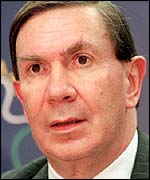
| | Monday, 6 January, 2003, 14:25 GMT Irvine backs burglary guidelines  The prison population is 72,000 and still rising The government's most senior law officer has backed guidelines to judges that keep most first-time non-violent burglars out of jail. The Lord Chancellor, Lord Irvine, has told the BBC he believes people are sophisticated enough to understand that community sentences work more effectively than prison terms in rehabilitating offenders.
The move prompted press criticism of the government over the weekend when it emerged that two serial burglars - one from Norwich, the other from London - were spared prison sentences under the new guidelines. But Lord Irvine told BBC Radio 4's Today programme he had "no difficulty agreeing with the Lord Chief Justice" on the guidelines. In a wide-ranging interview being broadcast on Monday morning, he accepted burglaries with "aggravating features" should still be dealt with by prison sentences.
Lord Irvine - who has been accused of making excuses for not sending criminals to prison by a group representing victims of crime - said the evidence suggested community service could help reduce reconvictions by offenders. The issue was whether the public would be protected by a "vigorous programme of community service" rather than "ever increasing" prison terms, he continued. Effective punishment
In December Lord Woolf, the most senior judge in England and Wales, said the sentencing "starting point" of up to 18 months in prison no longer applied and courts should impose a community sentence in the first instance. That must be an effective punishment which would tackle the offender's underlying problems, such as drug addiction, he added. Norman Brennan, director of the Victims of Crime Trust, condemned Lord Irvine and Lord Woolf for their approach saying they were both "completely out of touch" with reality. He told the BBC he was in "absolute despair" at the failure of the criminal justice system to protect the public. "Many people now don't feel safe walking the streets. "They don't feel safe in their homes," he said. And he said he did not know a police colleague in the country who supported the judges. Civil liberties eroded On the issue of human rights, Lord Irvine told Today traditional civil liberties had been eroded post-11 September by anti-terror laws. This was especially true for foreign nationals who faced the possibility of being locked up without trial. "But exceptional circumstances where nations are under exceptional danger and threat call for exceptional remedies," he told the programme. He also defended moves to set up night courts to administer swift justice to street criminals. A leaked report from the Lord Chancellor's department last month suggested night courts were to be abandoned after pilot projects in London and Manchester failed. Night sittings were said to have cost up to 40 times more than daytime court hearings, according to the report. But Lord Irvine said that, although early indications suggested the night court pilot projects had not been successful, they were still being assessed. | | See also:  03 Jan 03 | England 20 Dec 02 | Politics 30 Dec 02 | Politics 20 Dec 02 | UK 10 Dec 02 | UK 25 Oct 02 | England 15 Oct 02 | UK 23 May 02 | Breakfast 30 Jan 02 | UK Internet links: The BBC is not responsible for the content of external internet sites | ||||||||||||||||||||||||||||||||||||||||||||||||||||||||||||||||||||||||||||||||||||||||||
 | |
|  E-mail this story to a friend E-mail this story to a friend |
| |
|
| | | ||
 | ||||
 | | Back to top
| ||
| ---------------------------------------------------------------------------------- To BBC Sport>> | To BBC Weather>> | To BBC World Service>> ---------------------------------------------------------------------------------- © MMIII | News Sources | Privacy |




 Many people now don't feel safe walking the streets