|
 |
 | | | | | | |||||||||||||||||||||||||||||||||||||||||||||||||||||||||||||||||||||||||||||||||||||||||||||||||||||||||||
| | | You are in: UK: Politics | |||||||||||||||||||||||||||||||||||||||||||||||||||||||||||||||||||||||||||||||||||||||||||||||||||||||||||||
|
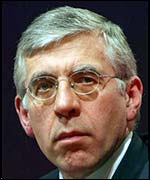
| | Thursday, 19 December, 2002, 09:45 GMT UN to hear of dossier's 'big gaps'  Iraq must reveal where their weapons are, says Straw UK Foreign Secretary Jack Straw says the United Nations will hear of "big gaps" in Iraq's dossier on its weapons of mass destruction. The chief UN weapons inspector, Hans Blix, will give the Security Council his initial impression of the arms declaration later on Thursday.
But Colin Powell, the US secretary of state, says there are problems with the declaration, "gaps, omissions and all of this is troublesome". Mr Straw insisted that a "material breach" of the UN Security Council resolution on disarmament "could be described as a trigger for military action", but that had not happened "so far". Iraq 'must cooperate' The UK would not be going to war "tomorrow", but he pointed out that Iraq has not accounted for the host of chemical warfare agents, nerve agents, special munitions and anthrax that it had previously declared. He said a "preliminary assessment" of Iraq's weighty declaration looked as though it was not "complete, full and accurate". Dr Blix and John Negroponte, the US Ambassador to the UN, are to deliver the official US response to the Iraqi declaration in Washington and New York.
"And then there will be requirements by the Security Council or by the inspectors, who have got power themselves to say to the Iraqis, 'you have now got to cooperate in a way you have not been cooperating in the past. "'We don't just mean cooperating to allow the weapons inspectors vehicles through, we mean to tell us, the international community, where the stuff is'." Mr Straw said he understood public "anxieties" about going to war with Iraq "because innocent people get killed" and it was the action of "last resort". "People may think, 'isn't the US and the UK about to take five steps ahead of itself and then got to war' - it isn't the case and if, for example, the US had been determined to go unilateral, it would have done so." Mr Straw insisted that the reason weapons inspectors were in Iraq "is because we know for absolute certain that Iraq has had weapons of mass destruction". As he spoke, Britain was stepping up preparations for a possible war with Iraq. The aircraft carrier Ark Royal is to lead a naval taskforce sailing towards the Gulf next month, on their way to "long-planned" exercises in the Indian Ocean. Contingency plans are in place to divert the vessels for war with Iraq if necessary, according to the Ministry of Defence. Foreign-flagged ships? A first order for a ship to carry military supplies to the Gulf has also been placed by the MoD. But a shortage of merchant ships and loss of maritime skills could undermine Britain's role in any military action against Iraq, according to the union Numast. BBC correspondent Stephen Cape said the MoD may have to use foreign-flagged or foreign crewed ships which would pose a security risk. Since the Falklands War the number of 500 gross tonne ships has dropped by 700, the union said. Defence Secretary Geoff Hoon told MPs the government would consider sending extra naval resources to the Gulf in the new year if needed. But BBC correspondent Andrew Gilligan said any deployment would not start for at least another month and would appear to be small. "When Britain last sent an armoured brigade to the Gulf, in 1990, it hired in a matter of days 36 ships. This time, so far, we're hiring three." War 'not imminent' Mr Hoon added a standby fleet of ships was being built-up, orders of specialised desert equipment being speeded up and some troop units were being put on shorter notice to move. "I want to emphasise once more that these are contingency preparations aimed at increasing the readiness of a range of options," he told the Commons. The UK's most senior military chief said troops were frustrated they did not know what they would be doing. Admiral Sir Michael Boyce said: "Obviously it is frustrating in the sense that you always want to know exactly where you are heading so you can actually do proper planning for it." | |
See also:  19 Dec 02 | Politics 19 Dec 02 | Americas 19 Dec 02 | Politics 15 Dec 02 | Middle East 17 Dec 02 | Politics 05 Aug 02 | UK 18 Dec 02 | Americas Internet links: The BBC is not responsible for the content of external internet sites | |||||||||||||||||||||||||||||||||||||||||||||||||||||||||||||||||||||||||||||||||||||||||||||||||||||||||||
 | |
|  E-mail this story to a friend E-mail this story to a friend |
| |
|
| | | ||
 | ||||
 | | Back to top
| ||
| ---------------------------------------------------------------------------------- To BBC Sport>> | To BBC Weather>> | To BBC World Service>> ---------------------------------------------------------------------------------- © MMIII | News Sources | Privacy |




 It is highly probable that the inspectors will say there are big gaps in this disclosure