|
 |
 | | | | | | |||||||||||||||||||||||||||||||||||||||||||||||||||||||||||||||||||||||||||||||||||||||||||||||||||||||||||||
| | | You are in: UK: Politics | |||||||||||||||||||||||||||||||||||||||||||||||||||||||||||||||||||||||||||||||||||||||||||||||||||||||||||||||
|
| | Monday, 23 September, 2002, 11:38 GMT 12:38 UK Voices in the wilderness? 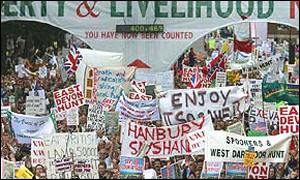 No coherent message from countryside marchers
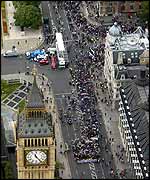
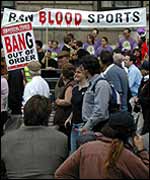
As the biggest demonstration since the miners' strike or the poll tax revolt hit London, the minister said he didn't know what they were protesting about.
"I certainly don't want to dismiss either the scale or the feelings of the people who were on this march," he said. "But you do have to ask the question, what's it all about. "I am pretty good at listening, but what is the message?" And it is that lack of focus that will probably ensure the marchers fail in their demands - whatever they are. Beef ban Because, unlike the miners and the anti-poll tax marchers, the countryside demonstrators have no single, coherent demand. Some are fiercely opposed to a ban on fox hunting, others are fed up with the gradual decline in rural services and others are in desperate straits in the wake of the foot and mouth crisis and the beef ban. And undoubtedly some detest the Labour government and simply want to stick the green welly in where it hurts. But, rather like the anti-globalisation protesters, there are just too many disparate groups with too many, often vague, demands and no real leadership for any coherent message to emerge. Some believe the pro-hunting lobby has hijacked the demonstration. The hunters argue their cause has become a rallying point for the more widespread concerns. But the single demand "hands off our hunting" clearly does not do the marchers' justice. Tory voters Equally a "save our countryside" demand is meaningless. So the government can easily respond with promises of a free vote on hunting and by trotting out all the usual statistics on how much is being spent on rural services and so on. And, of course, there are many in the Labour party - and even a few in the cabinet - who believe this is simply about a group of either Barbour-wearing toffs or whingeing farmers attempting to protect their privileges.
Labour voters, they argue, live in towns and cities and only visit the country to be told to get off the land by shotgun-wielding, subsidy-grabbing farmers. For them - and there are enough of them in the Labour movement to be a serious concern for the prime minister - the countryside marchers are not a deprived group in need of assistance. They are privileged, special pleaders who should be defeated. Class war The fact that Prince Charles has controversially stepped into the middle of this hugely-political arena only adds to that group's belief that this is the class enemy on the march. The prime minister certainly does not take that view. The language of class war is a foreign one to him in any case. And he has a history of bending to such large outpourings of public anger - ask the fuel tax protesters or pensioners. On Monday a Downing Street spokesman said the Prime Minister "governs for the whole country and of course he listens to views that are peacefully and democratically expressed". It is already clear that, while he is now committed to pressing ahead with some sort of vote on hunting, he probably wishes he had never got himself onto that hook in the first place. Ever since he surprised the world with his announcement to ban the practice, he has ducked and wriggled and delayed. So his instincts may be to offer the marchers something else. But without a concrete set of demands it is impossible to see what would do the trick. And he cannot be sure anything would work or would not actually risk losing him support from his traditional constituency. This may be one protest he is willing to live with. | |
See also:  23 Sep 02 | UK Internet links: The BBC is not responsible for the content of external internet sites | |||||||||||||||||||||||||||||||||||||||||||||||||||||||||||||||||||||||||||||||||||||||||||||||||||||||||||||
| |
|  E-mail this story to a friend E-mail this story to a friend |
| |
|
| | | ||
 | ||||
 | | Back to top
| ||
| ---------------------------------------------------------------------------------- To BBC Sport>> | To BBC Weather>> | To BBC World Service>> ---------------------------------------------------------------------------------- © MMIII | News Sources | Privacy |