|
 |
 | | | | | | ||||||||||||||||||||||||||||||||||||||||||||||||||||||||||||||||||||||||||||||||||||||||||||||||||
| | | You are in: UK: Politics | ||||||||||||||||||||||||||||||||||||||||||||||||||||||||||||||||||||||||||||||||||||||||||||||||||||
|
| | Wednesday, 24 July, 2002, 11:49 GMT 12:49 UK Experts play down security fears 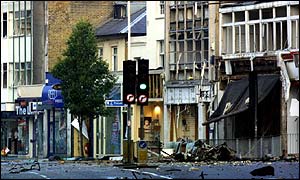 The UK has suffered terror attacks for 30 years MPs on the defence select committee have delivered a highly critical assessment of the UK's capabilities to prevent and deal with a major terrorist attack. But two security experts from Jane's magazines told BBC News Online Britain was better equipped than most other countries to cope with such a situation. Charles Heyman, editor of Jane's World Armies, said the outlook was not as bleak as MPs had suggested.
"I'm not too worried because people forget we've had 30 years of terrorism and the UK is streets ahead of nearly everyone else in dealing with terrorist incidents," he said. "The way emergency services can come together to deal with such an incident is breathtaking compared with other parts of the world." The armed forces were generally well prepared for a terrorist attack, he added, although he said there was a need for greater expertise across the forces to deal with nuclear and biological threats. Mr Heyman conceded the government's response to 11 September could have been faster.
"The MoD could do a little bit more to reassure the public that the adequate safeguards are in place. It's all gone a bit quiet," he said. The defence select committee called for a central authority to co-ordinate the various government departments involved in emergency planning - in the US, a government department was set up to govern homeland defence. But Mr Heyman disagreed, saying the MoD and Home Office already did this. However, Chris Yates, editor of Jane's Transport, said there was no "joined-up" policy towards emergency planning. "In the UK, there's certainly a case for a co-ordinated centre," he said. Explosives "But I'm not sure it's necessary to go the whole hog and put in an Office for Homeland Security with all the powers it has." Mr Yates said aviation security was generally very good in the UK, but the government had "sat back on its laurels in some ways".
Improvements had only been made in response to threats and should be developed more pro-actively. "It's all very well for politicians to talk up the fact we have the best security in the world, but they tend to hide behind statements like that and do nothing to advance the levels until an event happens." They way journalists and robbers had repeatedly been able to breach airport security showed access to areas should be tightened up, he added. "If they can do it, then a terrorist with a plastic chunk of explosives can walk into an airport and put it on a plane, which could bring it out of the sky over the Atlantic." Mobile phones Mr Heyman said there was one potential threat which could not be countered. "There's nothing we can do against random suicide attacks. "The world's best anti-terrorist force is Israel and they haven't found a way to deal with it." Mr Heyman played down one of the most striking findings in the report - that the army would have to use mobile phones because of the incompatibility of its military radio with the emergency services. He said that was not a problem, as phones were lighter and would get a better signal. | |
See also:  24 Jul 02 | Politics 17 Jul 02 | UK 15 Jul 02 | Archive 31 Dec 01 | Politics 14 Dec 01 | Politics Internet links: The BBC is not responsible for the content of external internet sites | ||||||||||||||||||||||||||||||||||||||||||||||||||||||||||||||||||||||||||||||||||||||||||||||||||
| |
|  E-mail this story to a friend E-mail this story to a friend |
| |
|
| | | ||
 | ||||
 | | Back to top
| ||
| ---------------------------------------------------------------------------------- To BBC Sport>> | To BBC Weather>> | To BBC World Service>> ---------------------------------------------------------------------------------- © MMIII | News Sources | Privacy |